· Daniel Suess · Compliance · 2 min read
Audio Description & Digital Accessibility: Germany Compliance Guide
The German media and digital accessibility landscape is undergoing a rigorous compliance evolution.
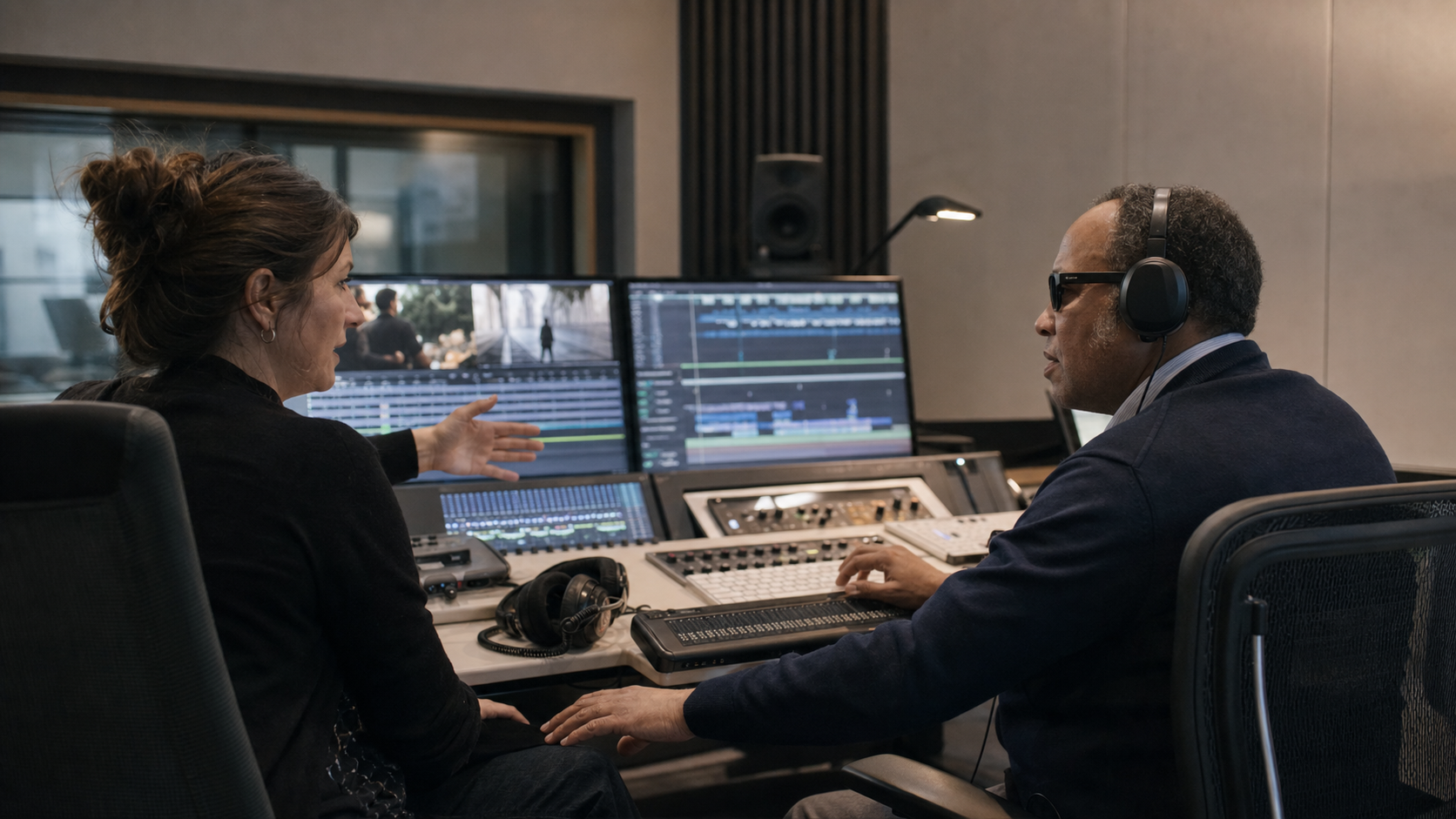
The German media and digital accessibility landscape is undergoing a rigorous compliance evolution. Driven by the enforcement of the Accessibility Strengthening Act (Barrierefreiheitsstärkungsgesetz – BFSG)—Germany’s transposition of the European Accessibility Act—alongside state media regulations (Medienstaatsvertrag), private broadcasters, streaming operators, and digital enterprises face stringent new standards.
Meeting these obligations requires navigating a precise matrix of legal expectations, technical hurdles, and modern production solutions.
The Regulatory Drivers
The BFSG and Market Surveillance
The BFSG establishes mandatory accessibility requirements for consumer-facing digital services, e-commerce applications, hardware systems, and media platforms operating within Germany. Active market surveillance and regular monitoring reports by German media regulators (Landesmedienanstalten) ensure that private broadcasters and VOD providers actively track and expand their accessible inventories. Non-compliance exposes enterprises to official warnings, mandatory remediation windows, and substantial financial penalties.
Audiovisual Media and Streaming Obligations
Under the Medienstaatsvertrag and European directives, nationally licensed private television broadcasters and video-on-demand services must report on and continually expand their accessible offerings—including subtitling, sign language, and audio description (AD) for high-audience formats such as feature films, series, and sports broadcasts.
Key Challenges for German Media Teams
- Scaling Legacy Catalogues: Broadcasters and streaming platforms managing extensive video libraries face an enormous production backlog when tasked with retrofitting historical content to meet statutory accessibility benchmarks.
- Rigorous Quality Standards: German accessibility frameworks demand absolute precision in linguistic accuracy, structural timing, and perceivability to satisfy both regulatory bodies and consumer expectations.
- Operational Expense Pressures: Relying entirely on traditional human-only scripting and specialized studio workflows creates heavy operational costs, making it difficult for growing media teams to keep pace with rapid content release cycles.
How AI-Powered Workflows Transform Compliance
To satisfy strict German and European accessibility timelines without inflating operational overhead, media organizations are increasingly leveraging hybrid AI workflows:
Automated Drafting & Timing: Advanced multimodal platforms—such as Visonic AI—automate the labor-intensive initial steps of video analysis, generating contextually accurate audio descriptions and precise structural timing at scale.
Human-in-the-Loop Quality Assurance: Professional describers and localization editors oversee the generated output to guarantee linguistic precision, emotional context, and full regulatory compliance.
By integrating scalable automation into production pipelines, German content creators and digital platforms can convert regulatory mandates from an operational bottleneck into a seamless component of modern digital distribution.
Ready to streamline your German and European compliance workflows? Explore our pricing plans or contact our team to discuss your specific media accessibility requirements.