· Viren · Compliance · 2 min read
Audio Description & Digital Accessibility: Spain Compliance Guide
The Spanish media and digital accessibility landscape has entered a transformative era.
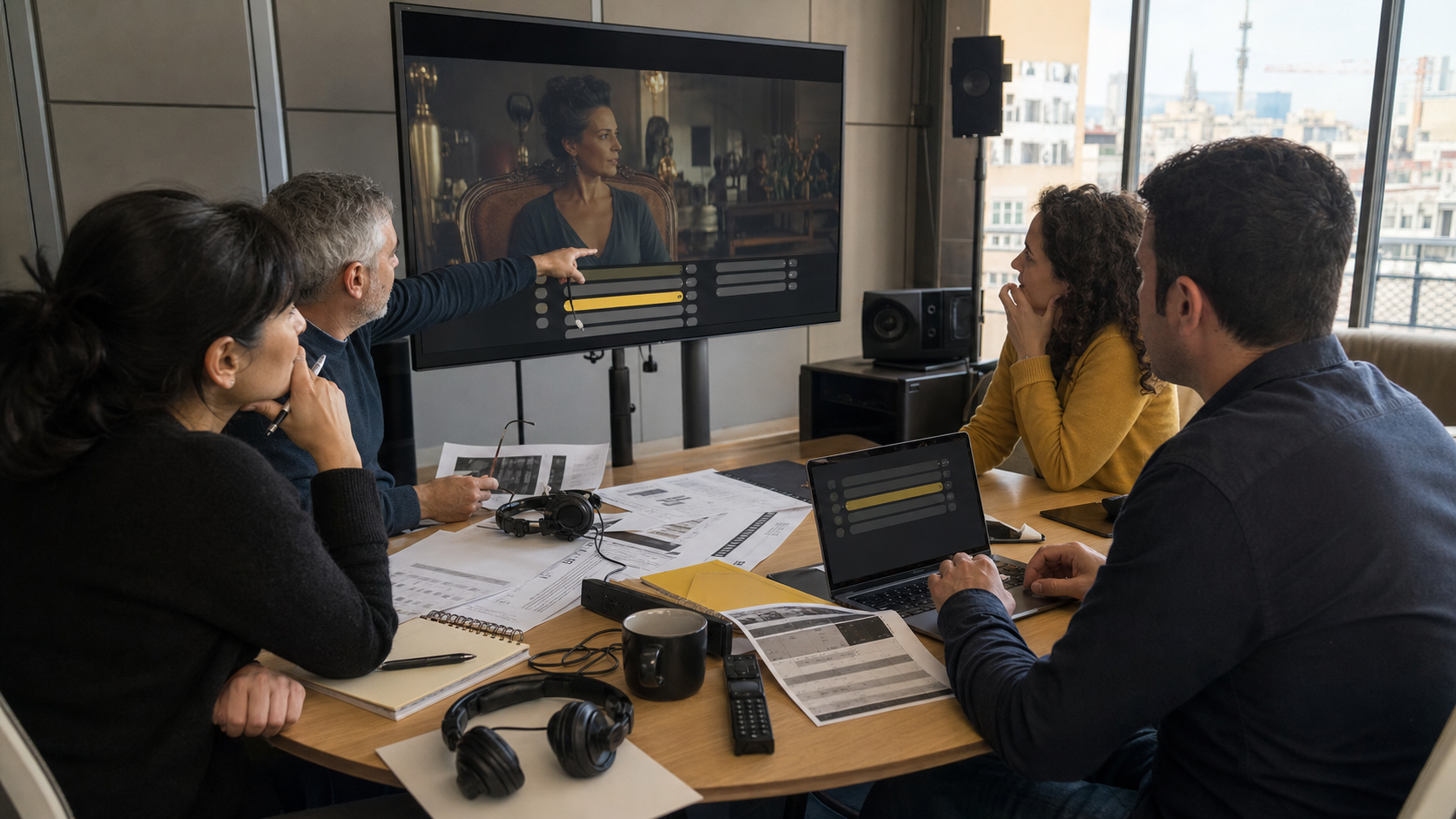
The Spanish media and digital accessibility landscape has entered a transformative era. Driven by the full implementation of the European Accessibility Act (EAA) and Spain’s General Law on Audiovisual Communication (Ley General de Audiovisual), broadcasters, streaming platforms, and content creators face rigorous new compliance standards.
Navigating these regulatory shifts successfully requires a clear understanding of the legal frameworks, regional linguistic demands, and modern scaling solutions.
The Regulatory Drivers
The European Accessibility Act (EAA) and National Transposition
The EAA has fundamentally reshaped digital and media accessibility across European Union member states. Transposed into Spanish legislation, the framework mandates strict digital accessibility standards for electronic services, e-commerce platforms, e-books, and video-on-demand (VOD) services.
With national enforcement active, non-compliance carries severe administrative consequences, ranging from substantial tiered financial penalties to potential restrictions on public procurement participation for commercial providers.
The General Law on Audiovisual Communication
Spain’s Ley General de Audiovisual extends statutory accessibility requirements far beyond traditional linear television. For the first time, pay-TV services, on-demand streaming platforms, and video-sharing operators must meet explicit quotas for audio description, subtitling, and accessibility features across their catalogues, placing heavy compliance pressure on both national networks and private digital publishers.
Key Challenges for Spanish Media Teams
- Multilingual and Co-Official Language Demands: Media production in Spain often requires simultaneous localization across co-official regional languages—including Catalan, Basque, and Galician—alongside standard Castilian Spanish. Managing multi-language audio descriptions manually multiplies production complexity.
- Expanding Digital Catalogues: Streaming services and production houses are tasked with retrofitting extensive historical video libraries to meet statutory digital accessibility guidelines.
- Resource and Cost Pressures: Traditional human-only scripting and specialized studio recording for localized accessibility assets demand significant operational expenditure, creating severe workflow bottlenecks.
How AI-Powered Workflows Transform Compliance
To satisfy strict EU and national accessibility timelines without inflating operational overhead, Spanish media organizations are increasingly leveraging hybrid AI workflows:
- Automated Drafting & Multilingual Scaffolding: Advanced multimodal platforms, such as Visonic AI, automate the labor-intensive initial steps of video analysis, generating contextually aware audio descriptions and multi-language outputs at scale.
- Human-in-the-Loop Quality Assurance: Professional describers and localization editors oversee the output to ensure cultural nuance, regional linguistic accuracy, and strict regulatory compliance.
By integrating scalable automation into production pipelines, Spanish content creators and digital platforms can turn regulatory mandates into a streamlined asset for wider European distribution.
Ready to streamline your Spanish and European compliance workflows? Explore our pricing plans or contact our team to discuss your specific media accessibility requirements.