· Aditi Raheja · Use Cases · 4 min read
Why Digital Podcasters Are Embracing Fully Automated Audio Description
As podcasts become visual, fully automated audio description helps creators make on-screen actions, graphics, reactions, and demonstrations accessible at scale.
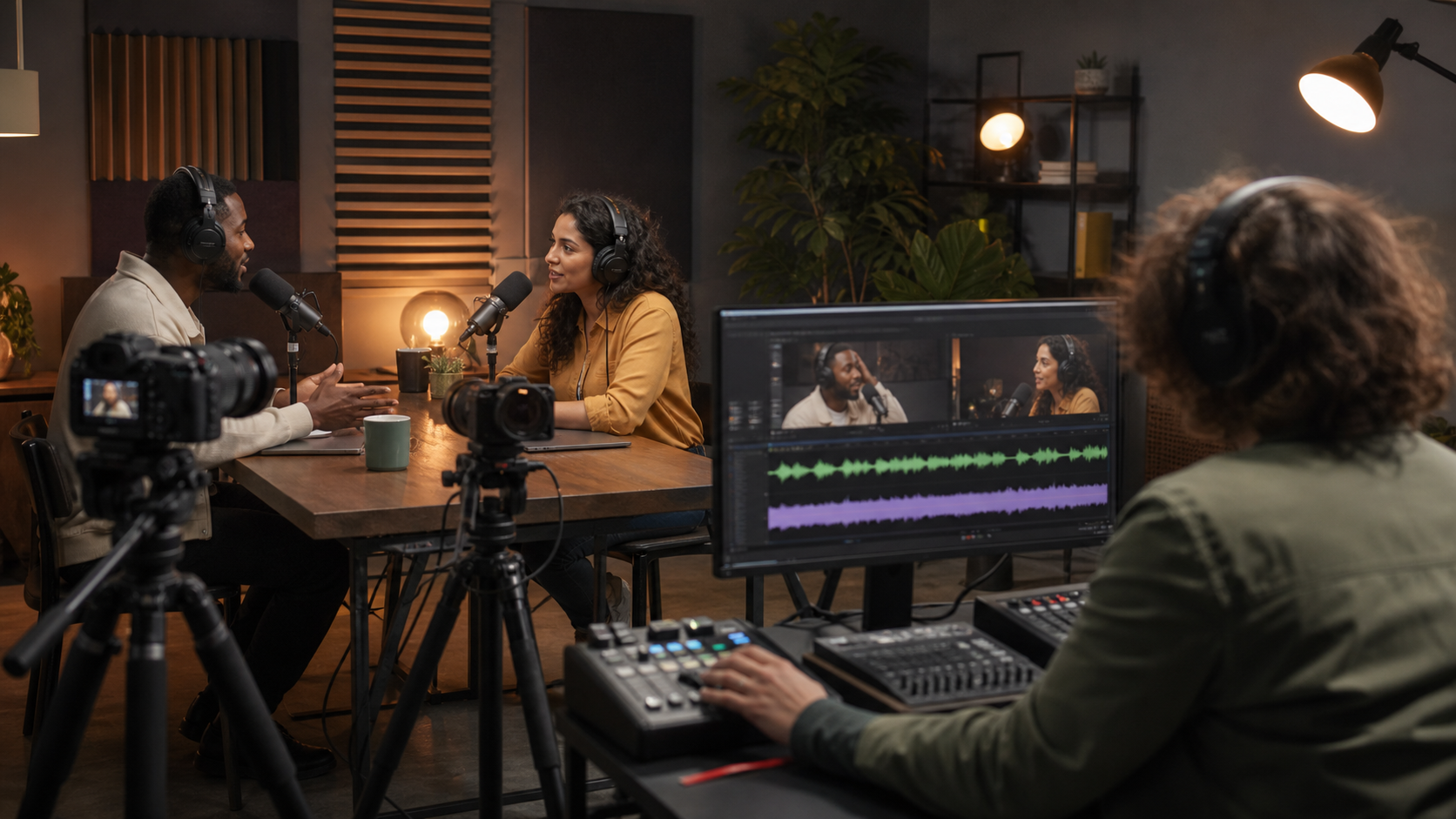
Podcasts are no longer just audio. Driven by YouTube’s massive podcast ecosystem, Spotify’s video integration, and the explosive growth of short-form social clips, the modern podcast is a multi-platform visual experience. Listeners have turned into watchers. Studio setups feature multi-cam cuts, dynamic guest reactions, on-screen graphics, product demos, and visual punchlines.
But this pivot toward video brings a hidden challenge: accessibility.
While transcripts and closed captions have become standard practice for the deaf and hard-of-hearing community, an entire segment of the audience is being left behind in the visual-first transition—listeners who are blind or have low vision.
For video podcasters, bridging this gap traditionally meant hitting a brick wall of cost and complexity. Until now.
The Blind Spot in Video Podcasting
When a podcast relies purely on audio, the dialogue carries 100% of the narrative. But the moment a show introduces visual elements, everything changes:
- A host holds up a product and says, “Look at this sleek interface.”
- A guest gestures to a data chart on a screen.
- A funny visual gag or reaction happens entirely through facial expressions or physical props.
To a viewer who is blind or visually impaired, those moments vanish into silence.
Enter Audio Description (AD)—a specialized narration track that describes crucial visual information (actions, expressions, scene changes, and on-screen text) during natural pauses in the dialogue.
Historically, AD was built exclusively for cinema, television, and high-budget streaming. For independent or mid-tier digital podcasters producing weekly episodes, traditional AD was completely out of reach.
Why Traditional AD Failed Creators
If you looked into adding human-produced Audio Description to a video podcast previously, you ran into two major roadblocks:
- The Manual Script Bottleneck: Traditional AD requires a human writer to watch the episode frame-by-frame, map out timecodes, and manually write descriptive text. Writing scripts is painstakingly slow, often taking hours for a single episode.
- Prohibitive Costs: Because of the intensive human labor involved, professional AD services routinely cost anywhere from $15 to $40+ per minute. For a 45-minute video podcast, adding an accessible audio track could cost hundreds of dollars per episode, which can quickly kill profit margins for growing networks.
As a result, accessibility became an afterthought for most digital creators. It wasn’t that podcasters didn’t want to be inclusive; the economics simply didn’t scale.
The Shift to Fully Automated AD
Just as automated transcription software revolutionized show notes and captions years ago, Fully Automated AI Audio Description is transforming video podcasts.
Unlike legacy “hybrid” workflows—where software handles speech-to-text but humans still have to manually write every descriptive script—the next generation of platforms uses advanced large language models to automate the entire pipeline:
- Computer Vision Analysis: The AI “watches” the video feed, identifying on-screen actions, guest movements, studio setups, and visual graphics.
- Smart Script Generation: It drafts concise, neutral descriptions tailored to fit seamlessly into the natural pauses of the conversation.
- Instant Delivery: Instead of waiting days or weeks for a boutique agency turnaround, creators can generate, review, and export compliant description tracks in minutes via self-service platforms like Visonic AI.
Scale Without the Overhead
For digital podcasters looking to future-proof their content, expand their audience reach, and meet rising digital accessibility expectations, moving to fully automated AD offers an undeniable return on investment:
- Fraction of the Cost: By eliminating the human script-writing bottleneck, automated platforms drop the cost of production down to a fraction of legacy agency rates—making accessibility financially viable for weekly episodic releases.
- Instant Turnaround: Matches the fast-paced publishing cadence of modern podcasters. You don’t have to hold an episode for two weeks waiting on accessibility compliance.
- Capture New Audiences & Platforms: With major discovery platforms prioritizing fully accessible, multi-format content, providing an AD track opens your show up to millions of potential audience members who rely on screen description.
- Effortless Compliance: Stay ahead of evolving digital accessibility standards across platforms without expanding your production budget or hiring specialized staff.
Make Your Next Episode Fully Accessible
Podcasting has always been built on human connection and intimacy. Expanding that connection to include every listener, regardless of visual ability, is the next evolution of the medium.
With fully automated AI audio description, accessibility is no longer a luxury reserved for multi-million-dollar streaming studios. It is a seamless, cost-effective tool built for every creator ready to make their visual podcast truly universal.
Ready to see how automated audio description fits into your podcast workflow? Explore our pricing plans or get started with Visonic AI to experience AI-powered media accessibility firsthand.