· Industry · 4 min read
The State of AI in Broadcasting: 5 Trends Reshaping Media in 2026
From automated accessibility to intelligent content discovery, AI is transforming every aspect of broadcasting. Here are the five trends media leaders need to watch in 2026.
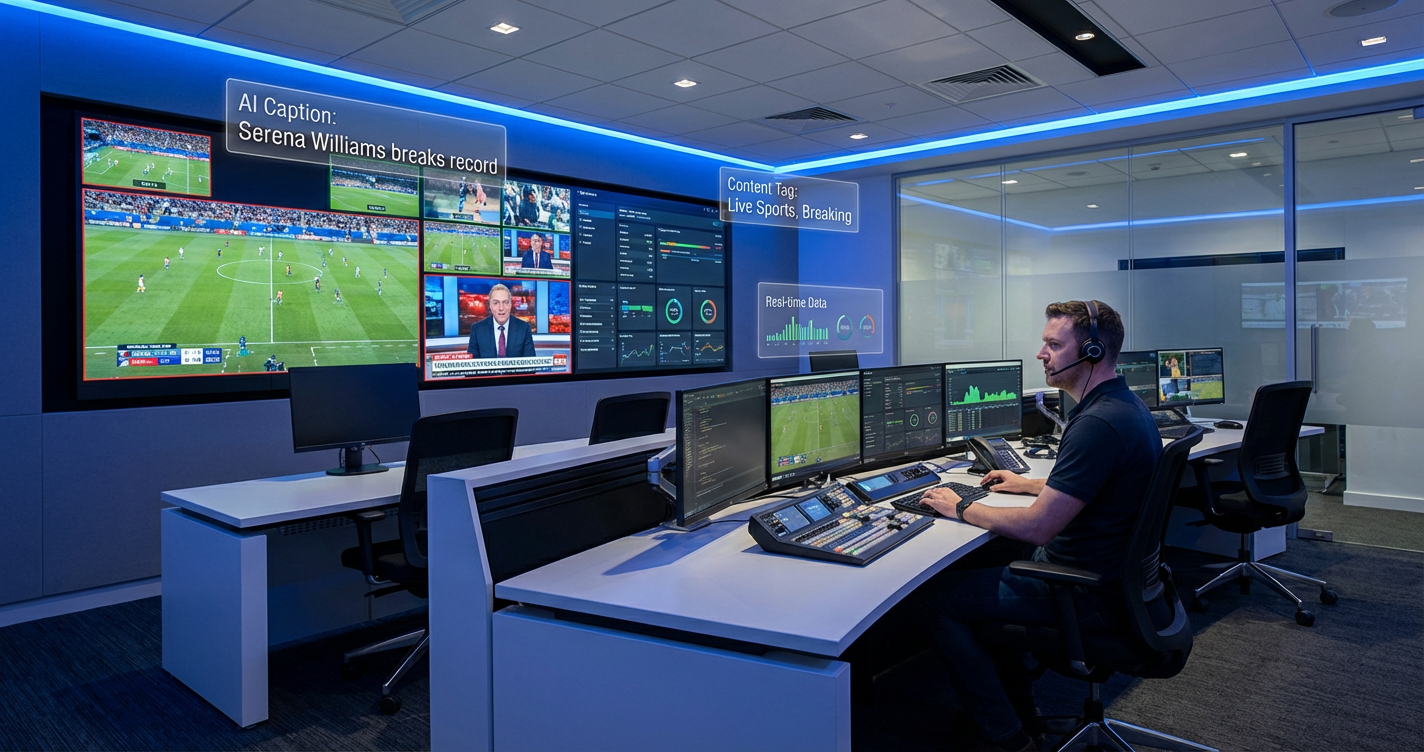
The broadcasting industry’s relationship with AI has shifted from experimentation to deployment. In 2026, AI is no longer a future possibility - it is an operational reality for media companies of every size. Here are the five trends defining this transformation.
1. Automated Accessibility at Scale
The convergence of three regulatory deadlines (the European Accessibility Act (June 2025), ADA Title II (April 2026), and CVAA expansions (January 2026)) has made accessibility the most urgent AI use case in broadcasting.
What is happening:
- AI-powered audio description is moving from pilot programs to production deployment
- Multi-language AD generation enables global compliance from a single workflow
- Captioning accuracy with AI has reached human parity for studio-quality audio
- Real-time accessibility features are being tested for live broadcasts
Why it matters: The combined regulatory pressure means broadcasters can no longer treat accessibility as a “nice to have.” AI is the only technology that makes compliance achievable at the scale required, processing thousands of hours of back-catalog content while keeping up with new releases.
The audio description market alone is projected to grow from approximately $400 million in 2024 to over $600 million by 2030, with AI-powered solutions driving the majority of that growth.
2. AI-Powered Content Intelligence
Media companies are sitting on decades of content with minimal metadata. AI is turning these dormant archives into searchable, discoverable, and monetizable assets.
What is happening:
- Automated scene-level metadata tagging replaces manual logging
- Natural language search enables queries like “Find all interview segments about climate change”
- Content similarity analysis identifies related content across archives
- Automated highlight detection creates clips for social media and marketing
Why it matters: Content libraries are only as valuable as they are discoverable. A broadcaster with 50,000 hours of archive footage has immense potential value, but only if they can find, categorize, and repurpose that content efficiently. AI metadata enrichment can process in hours what would take human teams months.
3. AI-Native Production Workflows
The post-production industry is integrating AI into every stage of the workflow, from ingest to delivery.
What is happening:
- AI-assisted editing tools in Premiere Pro, DaVinci Resolve, and Avid Media Composer
- Automated quality control that detects technical and compliance issues
- AI-powered transcription and translation for multi-language delivery
- Generative AI for rough cuts, storyboarding, and visual effects previews
Why it matters: Studios report potential efficiency gains of 80–90% in specific VFX tasks using AI. While the technology is not replacing human creativity, it is dramatically reducing the time spent on repetitive, mechanical aspects of production. This allows smaller teams to produce content at volumes that previously required much larger operations.
4. Personalized Content Discovery
Streaming platforms are deploying AI to combat subscriber churn through more intelligent content recommendation and discovery.
What is happening:
- Conversational AI interfaces for content search (“Show me something like The Bear but set in Japan”)
- Video-first browsing with AI-generated preview clips and trailers
- Personalized audio and visual presentation (adaptive thumbnails, localized descriptions)
- Mood-based and context-aware recommendations
Why it matters: With streaming subscribers overwhelmed by choice, the platforms that help viewers find content they love will retain subscribers. AI-powered discovery goes beyond “people who watched X also watched Y” to genuinely understanding content and matching it to viewer preferences.
5. Compliance Automation
Regulatory complexity is increasing, and AI is becoming essential for managing compliance at scale.
What is happening:
- Automated content rating and classification using scene-level analysis
- Watershed compliance checking for linear broadcast schedules
- Accessibility compliance verification (AD presence, caption accuracy, UI accessibility)
- Rights management automation across territories and platforms
Why it matters: A broadcaster operating across multiple territories faces a matrix of regulations that is impossible to manage manually at scale. AI-powered compliance tools reduce the risk of violations while freeing compliance teams to focus on edge cases and strategic decisions.
The Common Thread
Across all five trends, the pattern is consistent: AI is handling tasks that are too large, too repetitive, or too complex for human teams to manage at the scale modern media demands. This is not about replacing human judgment - it is about augmenting human capabilities so that media companies can serve wider audiences, comply with expanding regulations, and extract more value from their content.
The organizations that embrace these trends in 2026 will be better positioned for a media landscape that is only becoming more complex, more regulated, and more competitive.
Ready to put AI-powered accessibility into practice? Try the Visonic AI audio description generator. It’s one of the trends reshaping broadcasting, and it’s available today.