· Ari Surana · Industry · 10 min read
Audio Describing in the US: Career Guide for 2026
How to become an audio describer in the US: ADA Title II deadline, CVAA expansion, CAUDES certification, training at ACB, rates, and why demand is about to surge.
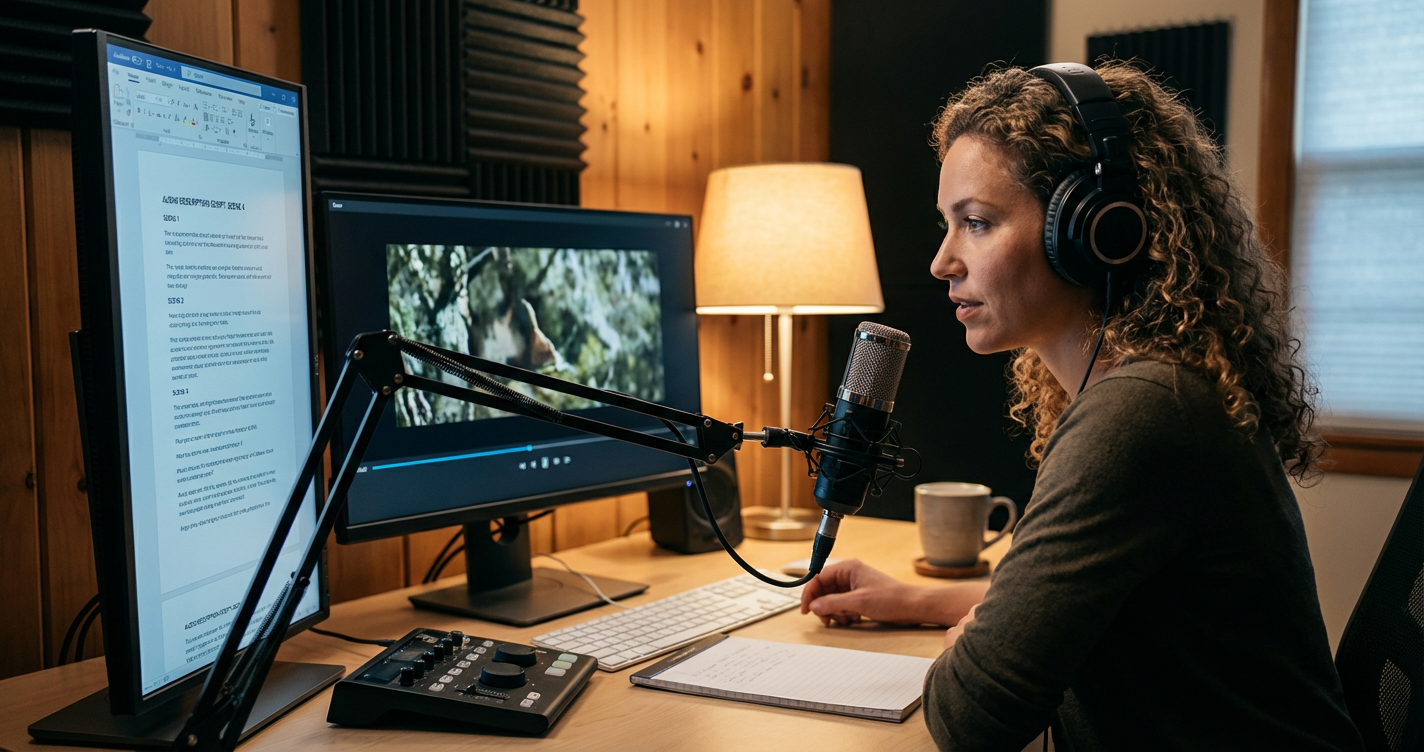
In April 2026, the ADA Title II web accessibility rule takes effect for large public entities: every city, county, state agency, public university, and school district serving 50,000 or more people. Their video content must conform to WCAG 2.1 Level AA, which includes Success Criterion 1.2.5: audio description for prerecorded video.
That’s roughly 90,000 local governments plus 50 state governments. Most of them have years of video content on their websites (meeting recordings, public hearings, training materials, educational content) with no audio description. Smaller entities have until April 2027.
Meanwhile, the FCC is expanding CVAA audio description requirements to all 210 designated market areas by 2035, with DMAs 101-110 added in January 2025. Netflix describes all original content from day one. And the first national certification for audio describers, the CAUDES credential, is targeting spring 2026 for completion.
The US audio description industry is heading into its biggest demand surge in history. The workforce isn’t ready. That’s why AI-powered platforms like Visonic AI are becoming part of the solution, generating draft audio descriptions that human professionals review and refine, making it possible to describe content at a scale that manual-only workflows can’t match.
The Regulatory Landscape
ADA Title II (April 2026)
The DOJ’s final rule published April 24, 2024 requires state and local government web content and mobile apps to meet WCAG 2.1 Level AA. Audio description for prerecorded video is a Level AA requirement.
- April 24, 2026: Entities serving 50,000+ population must comply
- April 26, 2027: Entities serving under 50,000 must comply
The scope is enormous. Every government entity publishing video (training materials, council meetings, educational content, promotional videos, emergency communications) needs audio description. Many have legacy content spanning years that requires remediation. Failure to comply exposes entities to ADA lawsuits.
For a detailed compliance guide, see our ADA Title II audio description compliance checklist.
CVAA (21st Century Communications and Video Accessibility Act)
The FCC requires the top broadcast networks in designated market areas to provide 87.5 hours of audio-described programming per quarter: 50 hours during prime time and children’s programming, plus 37.5 hours of general programming.
The expansion schedule:
| Year | Markets Added | Cumulative Coverage |
|---|---|---|
| Jan 2025 | DMAs 101-110 | Top 110 markets |
| Jan 2027 | DMAs 111-130 | Top 130 markets |
| Jan 2029 | DMAs 131-160 | Top 160 markets |
| Jan 2031 | DMAs 161-190 | Top 190 markets |
| Jan 2033 | DMAs 191-200 | Top 200 markets |
| Jan 2035 | DMAs 201-210 | All US markets |
FCC fines can reach approximately $144,000 per violation, capped at roughly $1.4 million for a single act.
Section 508
All federal agencies must ensure their ICT is accessible. The Section 508 Refresh (2018) incorporated WCAG 2.0 Level AA, requiring audio description for prerecorded video content. This applies proactively: no accommodation request is needed. It extends to federal contractors and organisations receiving federal funding.
State-Level Laws
California’s Unruh Civil Rights Act and proposed AB 1757 (WCAG 2.1 AA for all websites offering goods or services in California), New York’s state web accessibility policies, and procurement standards in multiple states all layer additional requirements on top of federal law.
Key Organisations
ACB Audio Description Project
The Audio Description Project at the American Council of the Blind is the central hub for the US AD community. Led by Dr. Joel Snyder (who pioneered live theatre audio description in 1981 at Arena Stage in Washington, D.C.), the ADP maintains the most comprehensive resources on AD in the country: provider directories, TV programming guides, training information, and the Audio Description Institute.
GBH Media Access Group
Based in Boston, GBH (formerly WGBH) invented television audio description through their Descriptive Video Service. They describe thousands of hours annually for TV, streaming, film, and museums. Their Media Access Group has been the most influential force in shaping US AD standards.
ACVREP and the CAUDES Certification
The Academy for Certification of Vision Rehabilitation & Education Professionals is developing the CAUDES (Certified Audio Description Specialist) credential in partnership with ACB. This will be the first formal national certification for audio describers in the US.
Key details:
- A CAUDES is certified to write, edit, and/or provide QC for audio description
- Examiners may be blind, have low vision, or be sighted
- Knowledge-based exam with multiple-choice and multiple-select questions
- Beta test question refinement targeting spring 2026 completion
- A CAUDES handbook with study resources will be provided to applicants
This certification will professionalise the field and establish baseline quality standards, important context as AI-generated descriptions become more common.
Other Key Players
- Descriptive Video Works: Leading North American AD provider, 20+ years, covering TV, film, ads, games, and education
- 3Play Media: Founded 2008 from MIT, AI-hybrid workflow pioneer, major education and enterprise clients
- Audio Description Solutions: Live theatre, dance, and music nationwide
- Audio Eyes: Exclusively AD, professional human voiceover talent
- Perkins School for the Blind: Coordinates live AD across Greater Boston, partnering with ART, Broadway in Boston, and other venues
How to Become an Audio Describer
There is no mandatory certification or licensure for audio describers in the US as of early 2026 (though CAUDES is coming). The field has historically been learned through intensive training programmes, mentorship, and on-the-job experience.
ACB Audio Description Institute
The Audio Description Institute is the flagship US training programme:
- Format: Virtual, week-long intensive (Monday-Friday, 1-5pm ET)
- Frequency: Twice per year (spring and fall sessions)
- Instructors: Dr. Joel Snyder and a team of sighted and blind professionals
- Curriculum: Lectures, discussions, collaborative writing sessions
- Materials: PDF of Dr. Snyder’s The Visual Made Verbal and a certificate of completion
Other Training Pathways
- GBH/WGBH Media Access Group: On-the-job training and professional development within their team
- Company-specific training: Descriptive Video Works, 3Play Media, and Audio Eyes train their own describers
- Mentorship and apprenticeship: Many working describers learned through mentoring relationships with established professionals
- People’s Light Audio Description Learning Network: Grant-funded cohort specifically training BIPOC and LGBTQ+ audio describers in the Philadelphia region
- Self-study: Dr. Snyder’s The Visual Made Verbal (published by ACB) is the primary textbook, available in print, Braille, and audiobook
There is no dedicated US university degree programme in audio description. Some translation studies and accessibility programmes include AD modules, and Royal Holloway (University of London) offers a free FutureLearn course accessible to US students.
Rates and Pay
The US has better pay data than most markets:
Hourly Wages
| Metric | Amount |
|---|---|
| Average hourly (AD Writer) | $38.94/hr |
| 25th percentile | $28.85/hr |
| 75th percentile | $47.12/hr |
| Remote/WFH average | $24.29/hr |
| Established company describer (Glassdoor) | ~$95,000/year |
Per-Minute Vendor Pricing
| Service Level | Rate per Minute |
|---|---|
| AI-assisted with human review (3Play Media) | $7.50/min |
| Extended AD (3Play Media) | $12.00/min |
| Traditional human AD | $15-$30/min |
| Premium/complex content | Up to $75/min |
SAG-AFTRA Considerations
AD voice narration overlaps with SAG-AFTRA jurisdiction. Union voiceover performers are guaranteed minimum rates, health and retirement contributions, and residuals. SAG-AFTRA’s 2023 strike negotiations specifically addressed AI protections for performers, including voice replication concerns directly relevant to AI-generated AD narration.
SAG-AFTRA signed an agreement with Narrativ (an AI audio marketplace) allowing union members to license their digital voice likeness through the platform, with performers setting their own rates at or above union minimums. The intersection of AI-generated AD voices and union agreements will be a significant tension point as the industry evolves.
The Diversity Gap
The US audio description field is predominantly white and non-disabled. This creates real problems: when AD writers only describe characters of colour, it implies whiteness as the default.
Several initiatives are working to change this:
- People’s Light (Pennsylvania) created the Audio Description Learning Network, a grant-funded cohort training BIPOC and LGBTQ+ describers in partnership with four regional theatres
- Open Door Theater and American Repertory Theater conducted the first BIPOC/AAPI Audio Describer Training in Massachusetts
- The Social Audio Description Collective: diverse AD professionals working for Netflix, HBO Max, Hulu, PBS, and consulting for independent filmmakers
- Gravity Access: artist-led AD geared toward smaller and independent companies, with sliding scale rates
Best practice: describe individual visual attributes (hair texture, skin colour, eye colour, build, height, age, visible disabilities) consistently across all characters, not just characters of colour.
Where AI Fits In
The Scale Problem
The ADA Title II deadline creates demand that the current workforce can’t meet through traditional methods alone. Roughly 90,000 public entities need to make their video content accessible. Most have years of legacy content. The total volume of video requiring AD far exceeds what a few hundred to a thousand professional describers can produce manually.
AI in Production
3Play Media is the leading US adopter of AI-assisted audio description, launching AI-enabled solutions in 2025 that combine AI script generation, natural-sounding AI voices, and expert human review. Their hybrid model offers AD at $7.50 per minute, compared to $15-$75 for fully manual production.
Visonic AI approaches the problem differently, using multimodal AI that understands long-form video contextually, not just frame by frame. The platform generates broadcast-quality audio descriptions with proper narrative awareness, timing, and multi-language support, so describers can review and refine rather than write from scratch.
Verbit offers similar AI-first AD services with human quality review. The pattern across all these tools is consistent: AI handles initial drafting, timing, and voice synthesis; humans handle review, refinement, and quality assurance.
What This Means for Describers
AI doesn’t eliminate the need for skilled audio describers - it changes where the work is. Instead of writing every script from scratch, describers increasingly review and refine AI-generated drafts, focusing their expertise on accuracy, cultural sensitivity, narrative coherence, and quality control.
The CAUDES certification (spring 2026) may establish quality benchmarks that influence how AI-generated AD is evaluated, creating a professional standard that distinguishes quality human-reviewed AD from unreviewed automated output.
For a deeper look at how the technology works, see our complete guide to AI for audio description.
What’s Coming Next
2026 is the inflection year for US audio description:
- April 2026: ADA Title II compliance deadline for large public entities. The single largest new demand event in US AD history.
- Spring 2026: CAUDES certification exam expected to be finalised. The first national credential for audio describers.
- January 2027: FCC expands AD requirements to DMAs 111-130. ADA Title II deadline for smaller entities.
- Ongoing: Netflix, Amazon, Disney+, Apple TV+ continue expanding AD catalogues. Education sector demand grows as universities face ADA scrutiny.
The US audio description market, valued at a significant portion of the global $406 million (2025), is heading into its highest-growth period. The workforce needs to scale through a combination of new human talent and AI-assisted workflows.
For a global perspective, see how the profession is evolving in the UK (where Media Act 2024 extends AD to streaming platforms), Germany (where only 4% of television has AD despite pioneering the discipline), and France (where audiodescription is treated as a literary art form).
Getting Started
- Take the ACB Audio Description Institute: The flagship training programme, offered twice yearly. Virtual format makes it accessible from anywhere in the US.
- Read The Visual Made Verbal: Dr. Joel Snyder’s textbook is the foundational resource for US audio description practice.
- Prepare for CAUDES: When the certification launches, being among the first credentialed describers will be a competitive advantage.
- Connect with the community: The ACB Audio Description Project is the central hub. Attend conferences, join mailing lists, follow the Social Audio Description Collective.
- Build diverse skills: Live theatre, broadcast, streaming, educational content, and museum description all represent distinct skill sets and client bases.
- Explore AI tools: Try Visonic AI to experience how hybrid workflows operate. Upload a video and see what AI-generated audio description looks like. The ability to review and refine these outputs is becoming a core professional skill.
Ready to see how AI augments professional audio description?
- Explore our products: See how Visonic AI handles audio description, auto-summarization, and auto-shorts
- Get started with Visonic AI: Sign in and upload your video to experience AI-powered audio description
- Contact our team: Discuss how AI tools can scale your audio description practice