· Guides · 4 min read
What Is Audio Description? Guide for Media Companies
Audio description makes video content accessible to visually impaired audiences. This comprehensive guide covers how it works, why it matters, and what media companies need to know.
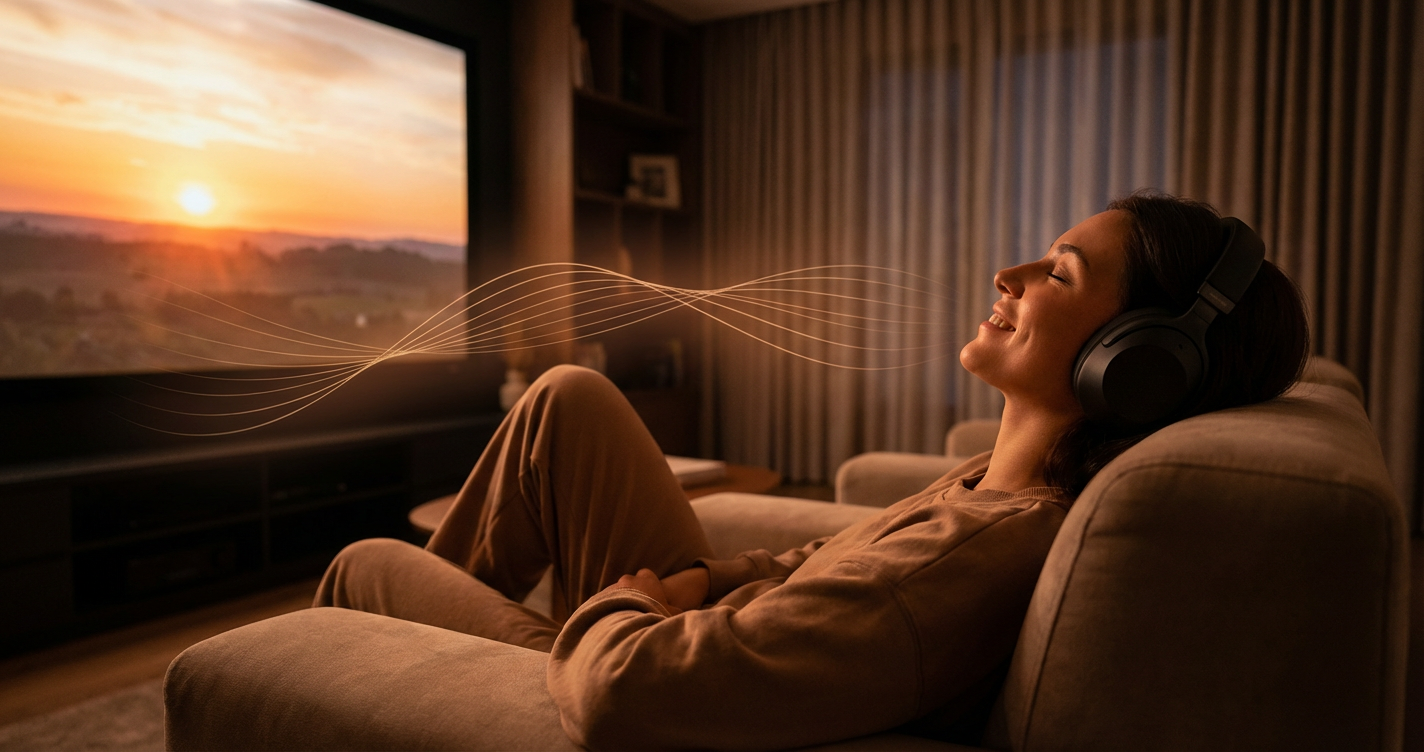
Audio description (AD) is an accessibility feature that provides a spoken narration of the visual elements in video content (actions, settings, facial expressions, scene changes, and on-screen text) for viewers who are blind or have low vision. It is the visual equivalent of what captions do for audio.
This guide covers everything media companies need to know about audio description: what it is, how it works, who benefits, and why it has become a business-critical capability.
How Audio Description Works
Audio description is a separate audio track that runs alongside the original soundtrack. During natural pauses in dialogue, a narrator describes the important visual information that a viewer cannot access through sound alone.
Example: In a scene where a character silently reads a letter and their expression changes from curiosity to alarm:
- Without AD: The viewer hears silence or background music
- With AD: “Sarah opens the letter. As she reads, her face drains of color. She drops the letter on the table and backs away.”
Types of Audio Description
Standard Audio Description: Descriptions are inserted during natural pauses in dialogue. This is the most common format, suitable for most content.
Extended Audio Description: The video pauses at key moments to allow longer descriptions. Used when important visual information cannot fit into natural pauses.
Audio Introduction: A brief overview of key visual elements (characters, setting, visual style) provided before the content begins.
Live Audio Description: Real-time description provided during live broadcasts or events. Typically delivered by a trained describer working in real-time.
Who Benefits from Audio Description?
Primary audience
- People who are blind (approximately 43 million globally)
- People with low vision (approximately 295 million globally)
- People with conditions that affect visual processing
Secondary benefits
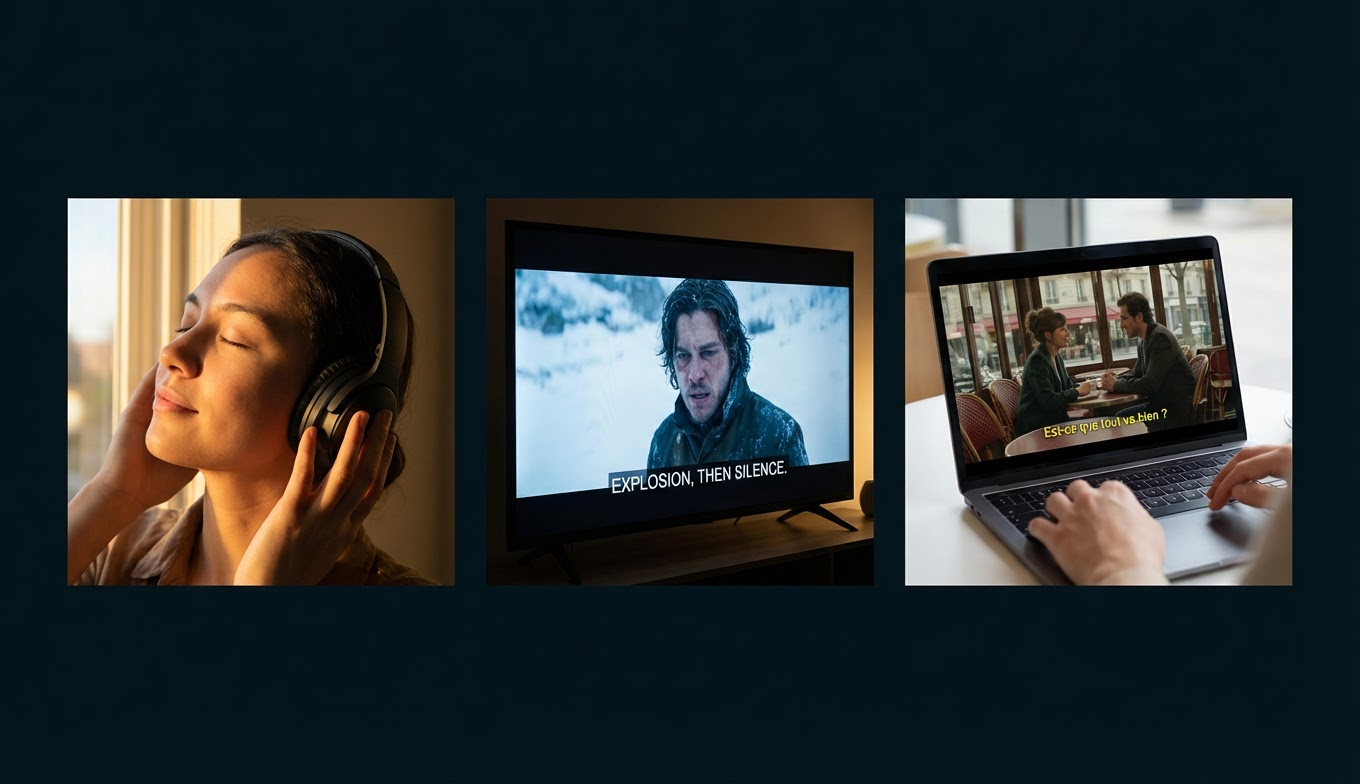
- People who are multitasking and not watching the screen
- Language learners who benefit from additional context
- People watching in low-visibility environments
- Anyone who wants a richer understanding of visual storytelling
The global population with vision impairment is approximately 2.2 billion people. While not all would use AD, the potential audience is substantial.
Audio Description Standards and Guidelines
Several organizations publish standards for AD quality:
ITC Guidance on Standards for Audio Description (UK)
The foundational document for AD practice. Covers principles of good description: accuracy, objectivity, consistency, and appropriate detail.
Audio Description Project Guidelines (US)
Published by the American Council of the Blind. Provides detailed guidance on description techniques, voice quality, and timing.
WCAG 2.1 Success Criterion 1.2.5
The technical standard referenced by most accessibility regulations. Requires audio description for all pre-recorded video content.
Key Principles
- Describe what is seen, not what is inferred: “She smiles” not “She is happy”
- Time descriptions to avoid overlapping dialogue: Use natural pauses
- Prioritize information: When time is limited, describe what is most important to understanding the story
- Be concise: Use clear, vivid language without unnecessary detail
- Maintain consistency: Use the same names and terms throughout
- Describe race, ethnicity, and appearance early: Enable viewers to form mental images of characters
Regulatory Requirements
Audio description is increasingly required by law:
| Regulation | Region | Requirement |
|---|---|---|
| EAA | EU | AD for audiovisual media services |
| ADA Title II | US | WCAG 2.1 AA (includes AD) for public entities |
| CVAA | US | AD on broadcast television |
| Ofcom Code | UK | 10% of programming with AD |
| AODA | Canada (Ontario) | WCAG 2.0 AA for large organizations |
| Accessible Canada Act | Canada | Barrier-free federal services |
The trend across all jurisdictions is toward expanding requirements. Organizations that invest in AD now are preparing for regulations that will only become more demanding.
Audio Description Production Methods
Traditional Manual AD
A human describer watches the content, writes a script, and the description is recorded by a voice artist in a studio. This produces the highest quality but is expensive ($15–50 per finished minute) and slow (weeks of turnaround).
AI-Powered AD
Multimodal AI systems analyze video content, generate descriptions, and produce synthetic narration automatically. This approach offers dramatically lower cost ($5-20 per finished minute), faster turnaround (hours), and multi-language capability.
Hybrid Approaches
AI generates initial descriptions that are reviewed and refined by human editors. This combines the speed and cost advantage of AI with the quality assurance of human oversight.
Getting Started with Audio Description
For media companies new to audio description:
- Understand your obligations: Review the regulations that apply to your markets
- Audit your content: Assess how much content needs AD and prioritize
- Choose a production method: Evaluate manual, AI, and hybrid approaches based on your volume and budget
- Integrate into workflows: Make AD a standard part of your content delivery pipeline
- Monitor quality: Gather viewer feedback and continuously improve
- Plan for scale: As regulations expand, your AD needs will grow
The Bottom Line
Audio description is not a niche feature. It is a fundamental accessibility requirement that serves a significant global audience. For media companies, providing AD is increasingly both a legal obligation and a competitive advantage. The technology to deliver it at scale and at reasonable cost is now available.
Ready to generate audio descriptions for your content? Try the Visonic AI audio description generator. Upload a video, choose your language, and get broadcast-grade AD without manual scripting.