· Technology · 3 min read
AI Video Metadata: Turning Archives From Cost Centers to Revenue Streams
Media archives are only as valuable as they are searchable. AI-powered metadata enrichment transforms decades of footage into discoverable, licensable, monetizable assets.
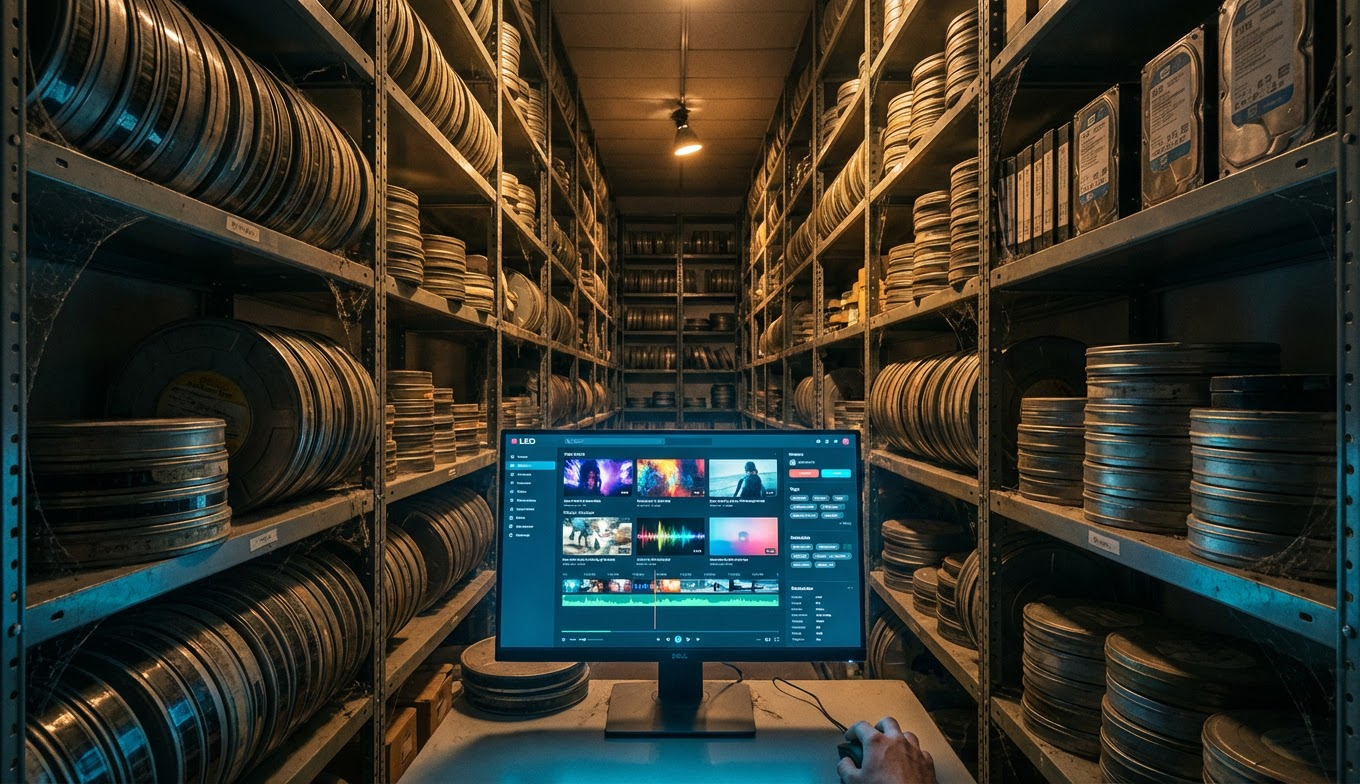
Media companies sit on decades of archive footage: news broadcasts, documentaries, sports events, entertainment programming. This content represents millions of dollars in production investment, but much of it is effectively invisible. Without comprehensive metadata, finding specific footage requires either institutional knowledge (“I think that was in the 2019 season”) or time-consuming manual search.
AI is changing this by making it possible to automatically generate rich, scene-level metadata for every piece of content in an archive. The result: content libraries that were previously cost centers become searchable, licensable, and monetizable assets.
The Metadata Gap
Most media archives suffer from a common problem: metadata is sparse, inconsistent, and limited to program-level information (title, date, duration, genre). Scene-level details (who appears, what happens, where it is set, what is said) are rarely captured systematically.
What most archives have:
- Program title and episode number
- Air date and duration
- Genre classification
- Perhaps a brief synopsis
What they need:
- Scene-by-scene breakdown with timestamps
- Character/person identification
- Location and setting classification
- Action and event detection
- Mood and tone analysis
- Dialogue transcription and topic extraction
- On-screen text and graphics identification
- Object and brand detection
How AI Metadata Enrichment Works
Modern computer vision and natural language processing can automatically generate comprehensive metadata:
Visual Analysis
- Face detection and recognition: Identify known individuals (with appropriate consent and privacy controls)
- Scene classification: Indoor/outdoor, urban/rural, day/night, specific locations
- Object detection: Vehicles, animals, buildings, products, signage
- Action recognition: Running, talking, fighting, cooking, celebrating
- Shot type identification: Close-up, wide shot, aerial, POV
Audio Analysis
- Speech-to-text: Full transcription of all dialogue
- Speaker identification: Who is speaking at each moment
- Topic extraction: What subjects are being discussed
- Music detection: Genre, mood, licensed tracks
- Sound classification: Environmental sounds, effects, ambience
Semantic Understanding
- Event detection: Identifying significant moments (goals, speeches, incidents)
- Narrative analysis: Story structure, plot points, emotional arcs
- Contextual classification: News vs. entertainment, factual vs. opinion
- Content rating: Automated classification for age-appropriateness
Business Applications
Content Licensing
Rich metadata enables licensing teams to find specific footage in seconds. “All footage of London from the air” or “interviews with tech CEOs from 2020-2024” - queries that would take hours of manual search become instant.
Compilation and Repurposing
Create themed compilations, retrospectives, and highlight reels by searching for content across the entire archive. AI identifies relevant moments regardless of where they appear.
SEO and Discovery
Detailed metadata improves content discoverability on streaming platforms and search engines. Text-based metadata (descriptions, transcripts) creates searchable content that drives organic traffic.
Advertising and Sponsorship
Scene-level understanding enables contextual advertising, matching ads to content moments where they are most relevant and brand-safe. Brand detection measures sponsorship exposure across broadcast content.
Rights Management
Automated detection of licensed music, branded content, and third-party footage helps manage rights compliance across large libraries.
The Economics
Manual metadata logging typically costs $15–50 per hour of content, with a single logger processing 3–5 hours per day. For a 50,000-hour archive:
- Manual: 10,000+ person-days at $1–2.5 million, taking 2–4 years
- AI: Days to weeks of processing at a fraction of the cost
The ROI comes from multiple streams: reduced search time for production teams, increased licensing revenue, improved content discovery, and compliance automation.
Getting Started
- Start with high-value content: Process the most frequently accessed or most licensable portions of your archive first
- Define your metadata schema: Determine what information is most valuable for your specific use cases
- Choose your tools: Evaluate AI metadata platforms based on your content types and volume
- Integrate with your MAM: Ensure enriched metadata flows into your existing media asset management system
- Iterate and improve: Use feedback from users to refine metadata quality and coverage
The archive footage gathering dust in your storage is not a liability. It is an untapped asset. AI metadata enrichment is the key to unlocking its value.