· Product · 3 min read
Multi-Language Audio Description: Global Scale
Serving EU, US, and global audiences means audio description in multiple languages. Here is how AI makes multi-language AD economically viable for the first time.
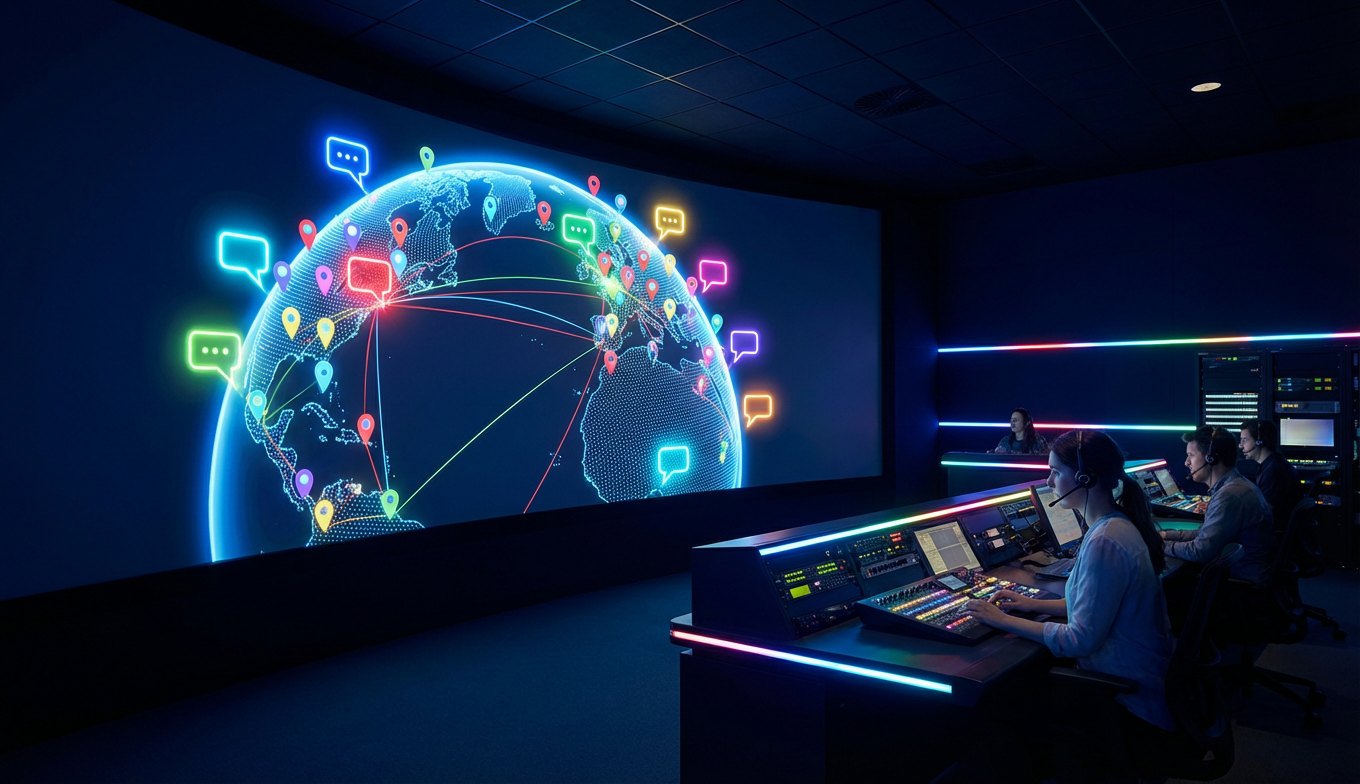
A streaming platform serving audiences across Europe needs audio description in German, French, Spanish, Italian, and more. A broadcaster with content in India needs AD in Hindi, Tamil, and English. An international content distributor needs AD in every language their content is licensed for.
With traditional audio description methods, each language is essentially a separate project: new script, new voice artist, new recording session, new QC pass. The cost and timeline multiply linearly with every language added.
AI changes this equation fundamentally.
The Multi-Language Challenge
Traditional Approach: Language × Cost
For a one-hour program requiring AD in 5 languages:
| Step | Per Language | 5 Languages |
|---|---|---|
| Scripting | $600–1,200 | $3,000–6,000 |
| Voice recording | $300–900 | $1,500–4,500 |
| Mixing | $200–500 | $1,000–2,500 |
| QC | $100–300 | $500–1,500 |
| Total | $1,200–2,900 | $6,000–14,500 |
And this must be repeated for every piece of content. For a library of 1,000 hours, multi-language manual AD in 5 languages could cost $6–14.5 million.
AI Approach: Analyze Once, Describe in Many
AI-powered audio description fundamentally restructures the cost:
- Single analysis pass: The AI analyzes the visual content once, building a comprehensive understanding of scenes, characters, and narrative
- Multi-language generation: From that single analysis, descriptions are generated in multiple languages simultaneously
- Marginal language cost: Each additional language adds 15–30% to the base cost, not 100%
For the same one-hour program in 5 languages:
| Step | Cost |
|---|---|
| AI analysis + base language | $300-1,200 |
| 4 additional languages (at ~25% each) | $300-1,200 |
| Total | $600-2,400 |
That is a 75-90% cost reduction compared to the manual approach.
Why Multi-Language AD Matters Now
Regulatory Pressure
The European Accessibility Act applies across all 27 EU member states, each with their own official languages. Content served in Germany needs German AD. Content in France needs French AD. The EAA does not accept single-language accessibility as sufficient for a multi-language market.
Market Expansion
For streaming platforms expanding into new markets, audio description in the local language is increasingly expected by consumers and required by regulators. AI multi-language capability removes cost as a barrier to market entry.
Content Licensing
When content is licensed for international distribution, accessibility features (including AD) are increasingly part of the delivery specification. Multi-language AD capability opens more licensing opportunities.
How It Works
1. Visual Analysis
Multimodal AI processes the video content once, identifying:
- Scene composition and setting
- Character appearances and actions
- Facial expressions and body language
- On-screen text and graphics
- Timing of available description gaps
2. Semantic Representation
The AI creates a language-independent semantic representation of what needs to be described (the concepts, relationships, and priorities) separate from any specific language.
3. Language Generation
From the semantic representation, natural language descriptions are generated in each target language. This is not translation - it is generation, meaning each language version is idiomatically natural, not “translationese.”
4. Voice Synthesis
High-quality speech synthesis generates narration in each language, matched to the timing and tone requirements of the content.
Languages Supported
Visonic AI currently supports audio description generation in:
- English (multiple variants)
- German
- French
- Hindi
- Additional languages in development
The architecture is designed for rapid language expansion, with new languages requiring training data and voice models rather than fundamental system changes.
The Business Impact
Multi-language AI audio description transforms accessibility from a per-market cost into a global capability:
- Faster market entry: Launch accessible content in new markets without waiting for local AD production
- Consistent quality: Same AI model ensures consistent description quality across languages
- Simultaneous delivery: All language versions available at the same time, enabling coordinated global releases
- Scalable compliance: Meet accessibility requirements across all served markets
For media companies operating globally, multi-language AI audio description is not just more efficient - it is the only practical way to achieve comprehensive accessibility across all markets.
Need audio description in multiple languages? Try the Visonic AI audio description generator and generate AD in English, German, French, Hindi, and more from a single upload.