· Industry · 4 min read
From Manual Scripts to AI-Empowered: The Evolution of Audio Description Technology
Audio description has evolved from a niche manual craft to an AI-augmented discipline where skilled describers can do 10x the work. Here is the journey from the first AD broadcasts to the AI-empowered describers of today.
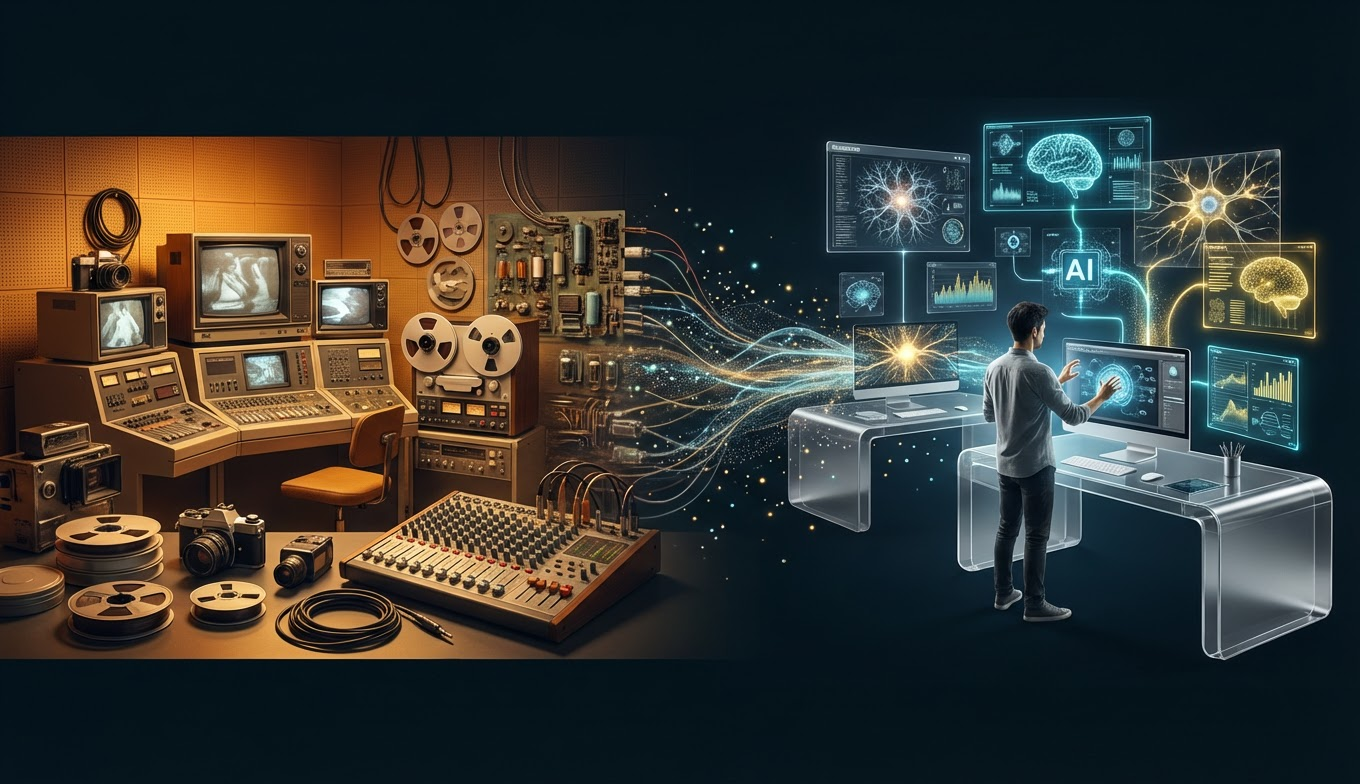
Audio description has existed for decades, but for most of that time it has been an artisanal craft, painstakingly created by skilled human writers and narrators, one program at a time. The result was high quality but limited reach. Only a tiny fraction of video content ever received AD, leaving the majority of media inaccessible to blind and low-vision audiences.
That is changing. AI is not replacing audio describers - it is supercharging them. Today’s AI-empowered describers can produce 10x the output, covering entire content libraries that were previously impossible to reach. The evolution from manual scripts to AI-augmented workflows is one of the most significant accessibility advances in media history.
The Early Days: A Manual Art (1980s–2000s)
The Pioneers
Audio description for broadcast television began in the early 1980s. In the United States, WGBH (Boston’s public broadcaster) was a pioneer, developing AD techniques and training the first generation of professional describers.
In the UK, the ITC (Independent Television Commission) published the first formal guidelines for audio description in 2000, establishing standards that remain influential today.
The Craft
Early AD was entirely manual:
- A trained describer would watch the program multiple times
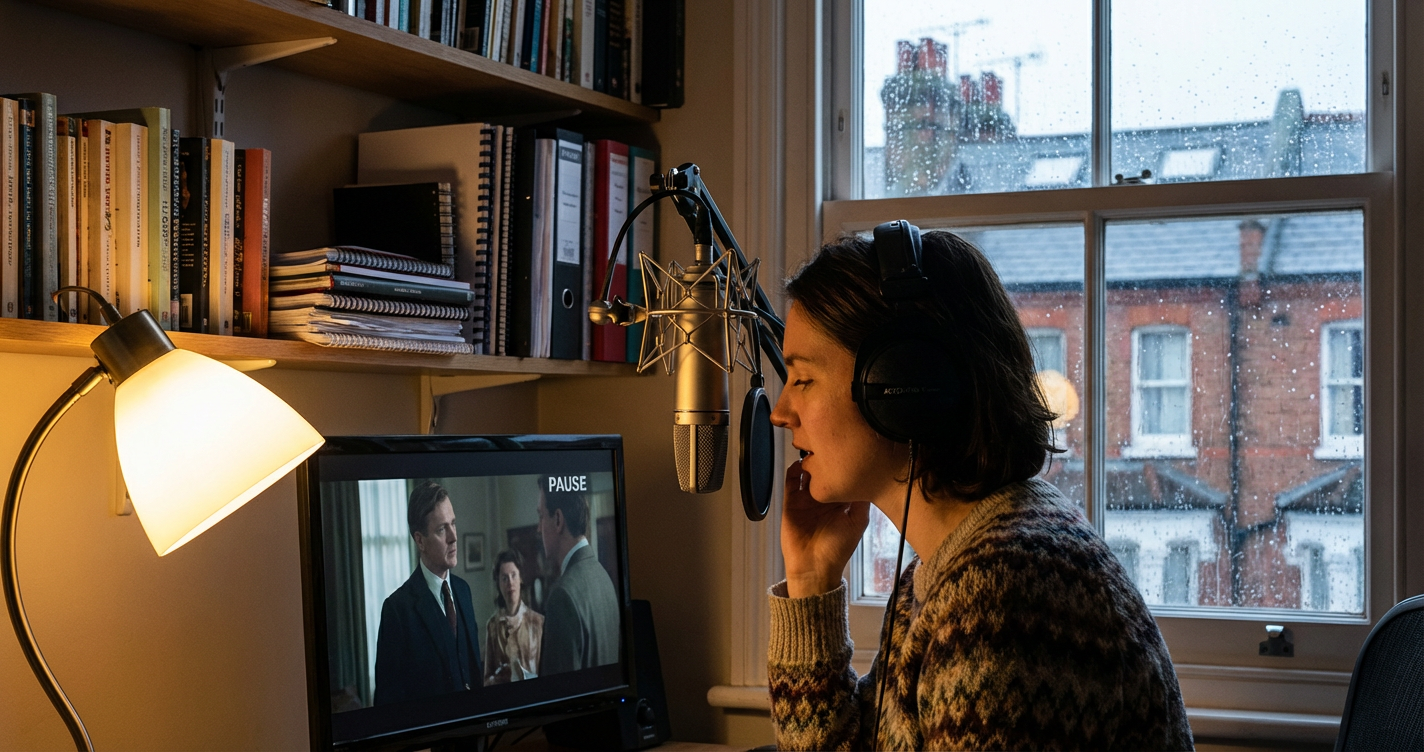
- They would write a script, carefully timing descriptions to fit between dialogue
- A narrator would record the script in a studio
- An audio engineer would mix the AD track with the original program audio
The entire process required 10–20 hours of human labor per hour of finished content. Only the most popular or publicly funded programs received AD.
The Limitations
- Cost: $15–50+ per finished minute made AD expensive
- Speed: Weeks of turnaround per program
- Scale: Limited pool of trained describers constrained capacity
- Language: Each language required a complete new production cycle
The Digital Era: Growing Demand (2000s–2020)
Regulatory Expansion
The 2000s and 2010s saw a steady expansion of AD requirements:
- The CVAA (2010) mandated AD on US broadcast television
- Ofcom established AD quotas for UK broadcasters
- The EU’s Audiovisual Media Services Directive encouraged AD across member states
Technology Improvements
- Digital delivery made it easier to include AD as an alternate audio track
- Streaming platforms introduced AD as a user-selectable feature
- Better text-to-speech (TTS) systems made synthetic narration more viable
The Gap Widens
As video content production exploded with streaming, the gap between content available and content with AD grew dramatically. By the early 2020s, the vast majority of streaming content lacked audio description.
The AI Revolution (2020–Present)
Computer Vision Meets Natural Language
The breakthrough came from the convergence of two AI capabilities:
- Computer vision advanced enough to understand not just objects but scenes, actions, and narratives
- Large language models capable of generating natural, contextually appropriate descriptions
Together, these technologies made it possible for the first time to handle the most labor-intensive parts of AD creation, freeing skilled describers to focus on creative and editorial decisions.
Multimodal Understanding
Modern AI systems process video, audio, and text simultaneously, understanding not just what is on screen, but what the characters are saying, what music is playing, and how all these elements work together. This multimodal approach produces descriptions that account for context in ways earlier automated attempts could not.
Quality Milestones
AI-generated audio description has progressed rapidly:
- 2020–2022: Early experiments produced descriptions that were accurate but stilted
- 2023–2024: Quality improved to be comparable with lower-tier manual AD
- 2025–2026: State-of-the-art systems produce descriptions that approach professional human quality, with proper narrative awareness and emotional sensitivity
The 10x Describer
With AI handling the heavy lifting (scene analysis, initial draft generation, timing calculations) a skilled describer can now review and refine AD for an entire season of content in the time it once took to describe a single episode. AI does not replace the human eye for quality; it amplifies it. One describer empowered by AI can cover what previously required an entire team.
What Comes Next
Human-in-the-Loop as the Standard
The most effective approaches put skilled describers in the driver’s seat: AI generates drafts, suggests timing, and handles multi-language adaptation, while human experts shape the final creative output. This is not automation replacing people; it is technology making experts radically more productive.
Real-Time AD
AI is enabling audio description for live content (sports, news, events) where real-time generation is required.
Personalization
Future AD systems may adapt to individual preferences: level of detail, vocabulary complexity, description style, and voice characteristics.
Universal Coverage
The ultimate goal: every piece of video content, in every language, with audio description available from the moment of publication. AI-empowered describers are the force that makes this vision achievable, combining human creativity and judgment with machine speed and scale.
The Arc of Progress
The story of audio description technology is a story of increasing inclusion. From a handful of manually described broadcasts in the 1980s to AI-empowered describers covering entire content libraries in the 2020s, the trajectory is clear: technology is not replacing the human craft of audio description - it is unleashing it at the scale the world needs.
Experience the next generation. Try the Visonic AI audio description generator. It’s the end-to-end platform built for production, broadcast, and streaming teams that need automated AD at scale.