· Ari Surana · Industry · 11 min read
Audio Describing in Australia: Career Guide for 2026
How to become an audio describer in Australia: training pathways, industry rates, key organizations, and why demand is growing faster than supply.
SBS produces up to 27 hours of audio described content every week. ABC adds another 14 hours. Streaming platforms like Netflix, Disney+, and Stan are expanding their accessible catalogues. Yet Australia remains the only major English-speaking country without a legislative mandate for audio description on television.
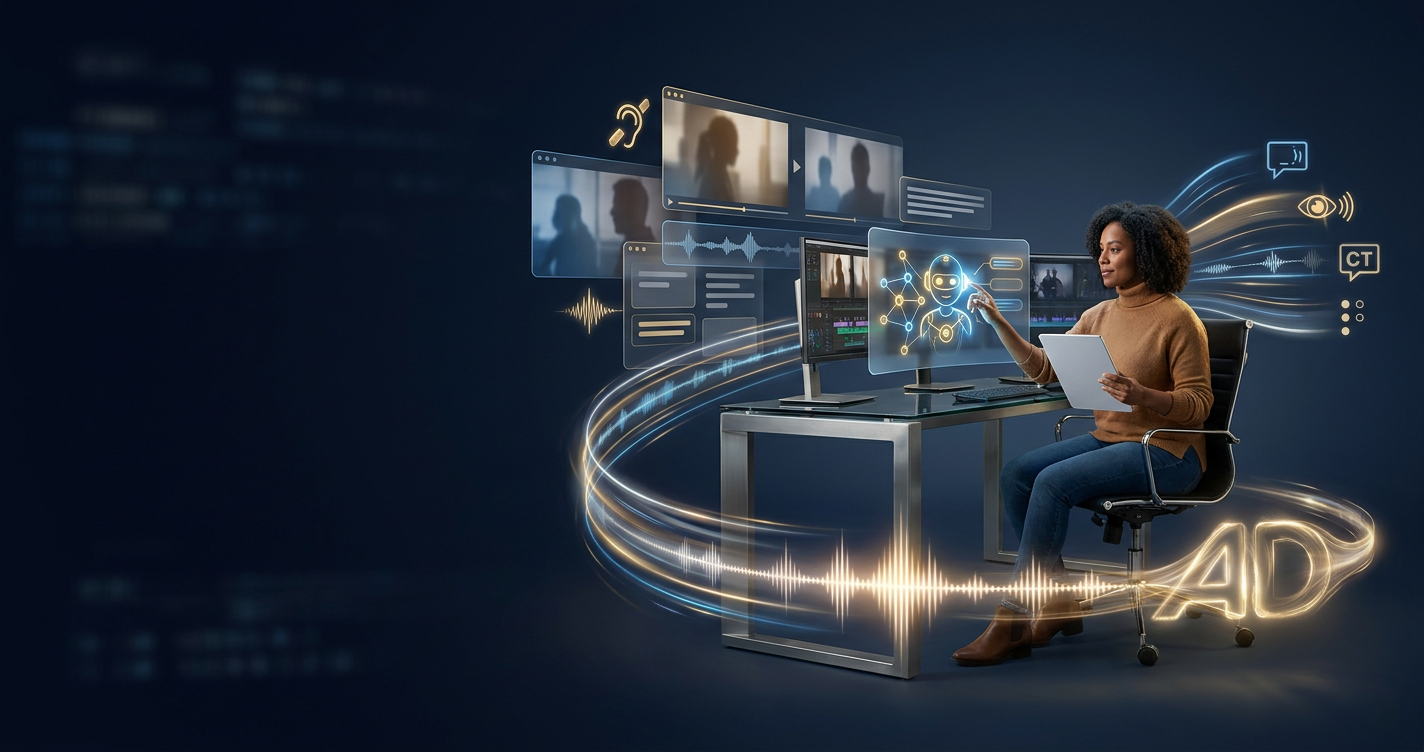
That gap between growing demand and absent regulation creates an unusual situation: the work is there, but the workforce isn’t large enough to meet it. Vision Australia, the country’s largest audio description provider, operates with roughly 60 describers, most of them volunteers. The entire Australian AD industry probably numbers somewhere between 100 and 200 active practitioners. AI-powered tools like Visonic AI are helping close that gap by automating the initial drafting of audio descriptions, but they still need skilled humans to review, refine, and deliver the final product.
If you’re considering audio description as a career in Australia, the timing is better than it’s been in the 30-year history of AD in this country.
The Regulatory Landscape: Where Australia Stands
Australia’s approach to audio description is an outlier among comparable nations. The Broadcasting Services Act 1992 mandates comprehensive captioning: 100% on free-to-air primary channels during peak hours, 90% on subscription TV. Audio description has no equivalent requirement.
What exists instead is government funding. In December 2019, the Australian Government allocated A$2 million for ABC and SBS to implement audio description services, which launched on broadcast channels in June 2020. This funding-based model means AD provision depends on political will and budget cycles rather than legal obligation.
Blind Citizens Australia has campaigned for AD legislation for over 25 years. An Audio Description Working Group convened by the government published recommendations for mandatory AD provisions, and amendments to the Broadcasting Services Act have been drafted with cross-party support. As of early 2026, those amendments haven’t passed into law.
The Disability Discrimination Act 1992 provides a general anti-discrimination framework, and has been used as the basis for complaints against broadcasters, but it doesn’t specifically mandate audio description. The WCAG 2.1 Level AA standard, which requires audio description for prerecorded video, is referenced in Australian government digital accessibility guidelines but isn’t universally enforced.
The practical result: Australia has AD because specific organizations choose to provide it, not because the law requires it. Compare that to the UK (Ofcom mandates 10% of programming), the US (CVAA requirements plus the incoming ADA Title II deadline), or the EU (Germany and France both face European Accessibility Act requirements since June 2025).
Who’s Doing the Work
Vision Australia
Vision Australia has been providing audio description for over 30 years, making it the longest-running AD operation in the country. Their team of approximately 60-64 describers, primarily volunteers, audio describes 160+ live performances annually at 26+ venues across Australia, backed by roughly 7,000 hours of preparatory research per year.
Their training program is the most established pathway into the profession (more on that below), and they partner with major theatre companies including Melbourne Theatre Company for live described performances.
SBS
SBS is the largest commissioner of audio description in Australia. Up to 27 hours of new AD content per week, with over 500 titles available on SBS On Demand. In December 2024, SBS expanded its digital AD catalogue significantly. They work directly with blind and low vision partners for script review and explicitly commit to casting culturally appropriate voices, including Indigenous voices, for relevant content.
ABC
ABC provides 14 hours of audio described programming per week, initially funded through the 2019 government allocation. ABC ran Australia’s first AD trial on iview in April 2015.
Other Key Players
Access2Arts in South Australia is the leading national provider of live professional audio description training. Media Access Australia handles advocacy and research. The Centre for Accessibility Australia hosts the annual Australian Access Awards. And at Curtin University, researchers are examining the future of AD in Australia (including the role of generative AI) and hosted the country’s first AD Symposium in October 2024.
On the technology side, AI-Media (ASX-listed, 350+ employees) launched LEXI AD at IBC 2025, an AI-powered audio description tool claiming up to 90% faster production than traditional methods.
How to Become an Audio Describer in Australia
There’s no formal national certification for audio describers in Australia. No degree program, no standardized credential. The industry relies on organizational training programs and mentorship rather than accreditation.
Vision Australia’s Training Program
The most established route. Here’s what it involves:
- Selection: Highly competitive. Only 1 in 5 applicants make it through the audition process. You need strong language skills from the start.
- Training: Minimum 6 months of structured training before you’re considered qualified.
- Mentorship: After training, a 3-month mentoring phase before you work independently on live descriptions.
- Total timeline: About 9 months from selection to independent work.
- Important context: Most Vision Australia describers are volunteers. This is the primary workforce model.
Access2Arts
Based in South Australia, Access2Arts runs a structured “Foundations of Audio Description” program across multiple terms per year (four terms in 2024, running February through November). This is focused on live performance description: theatre, events, exhibitions. Contact them at training@access2arts.org.au.
Curtin University MOOC
A free online introductory course, “Audio Description Principles and Practice,” designed to prepare learners for further professional training. Available through Class Central. This won’t make you job-ready on its own, but it’s a solid foundation.
International Training
Several international programs accept Australian participants remotely: Audio Description Training Retreats (virtual), FutureLearn courses, and the AVT Masterclass “Introduction to Audio Description.” These can supplement local training but won’t replace hands-on experience with Australian content.
What It Takes
Based on the selection criteria used by established programs, you need:
- Strong written English: AD scripting is fundamentally a writing discipline. You’re crafting concise, evocative descriptions that fit within dialogue gaps.
- Keen visual observation: You need to identify what’s visually significant and what the viewer needs to know.
- Cultural awareness: Especially in Australia’s multicultural context, and particularly regarding Aboriginal and Torres Strait Islander cultural protocols.
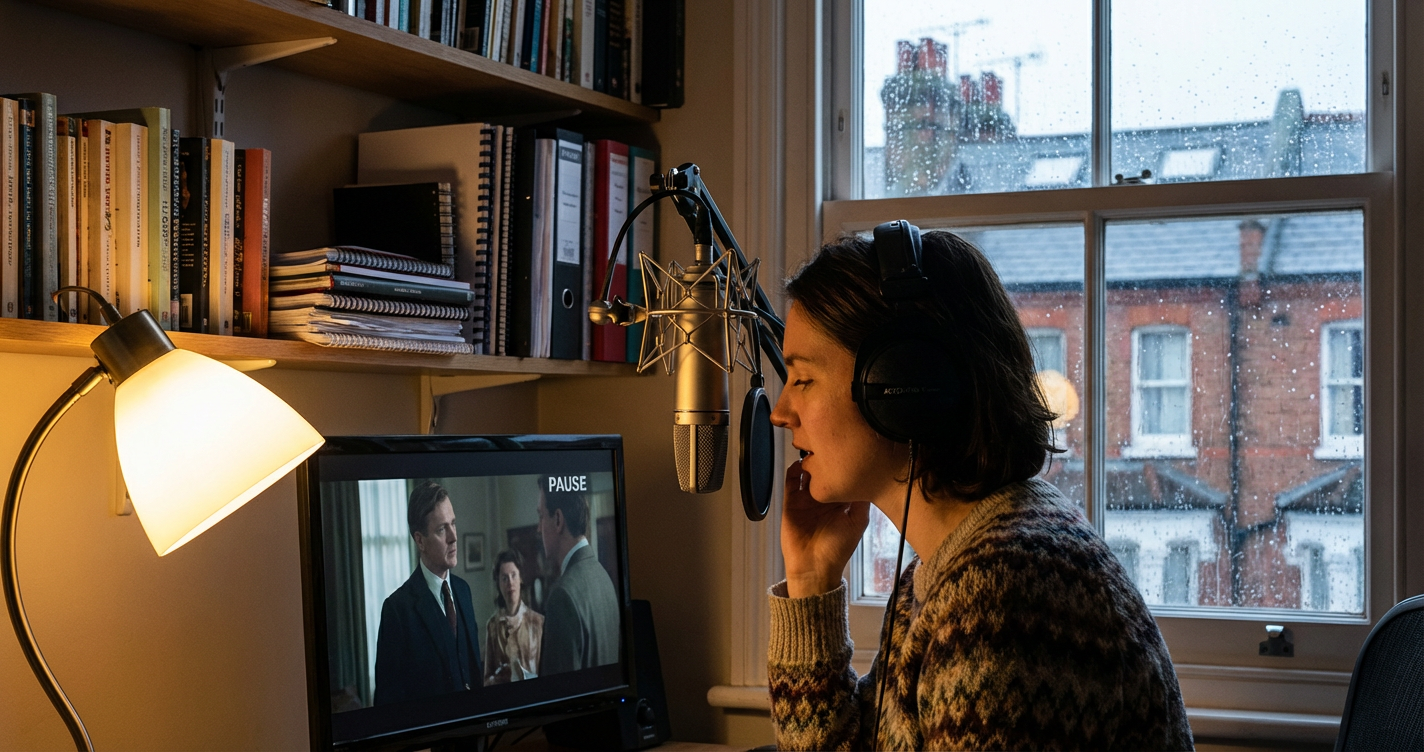
- Voice quality (for narration): Clear, neutral delivery that doesn’t compete with the original audio.
- Timing instinct: Fitting descriptions into natural pauses without rushing or overlapping dialogue.
The Business Side
Here’s where honesty is needed: making a full-time living purely from audio description in Australia is difficult in 2026.
The Rate Landscape
Australian-specific AD rates aren’t publicly standardized. Globally, traditional audio description costs USD $15-$75 per finished minute of content. The Australian market falls somewhere in that range, but there’s no published rate card.
What we know: Vision Australia’s describers are primarily volunteers. SBS and ABC commission AD work, but their rates aren’t public. Freelance AD scripting and voicing in Australia likely falls in the AU $20-$50 per finished minute range when you factor in scripting, timing, voicing, and review, though this is an estimate based on global norms adjusted for local labor costs.
For voice work specifically, MEAA (the relevant Australian union) publishes commercial voiceover minimums (AU $980.50/hour for multi-state TV work), but AD narration rates sit below these commercial benchmarks.
Who’s Hiring
The realistic client base for an Australian audio describer:
- SBS: the largest single source of AD work in the country
- ABC: steady demand, government-funded
- Vision Australia: primarily volunteer-based for live performance
- Theatre companies: through partnerships with Vision Australia and Access2Arts
- Streaming platforms: Netflix, Disney+, Stan, Foxtel/Binge (mostly handled through production houses)
- Museums, galleries, and cultural institutions: growing demand for audio guides with AD
Making It Work
Most working audio describers in Australia combine AD with adjacent skills: voiceover work, captioning, subtitling, accessibility consulting, or content writing. Pure AD specialization is a viable career path, but it takes time to build a client base that sustains full-time work.
The professionalization of the industry is happening (the first Australian AD Symposium at Curtin University in 2024, the Australian Access Awards recognizing AD excellence, the growing body of academic research), but it’s still early compared to the UK or Germany.
What Makes Australian Audio Description Unique
Aboriginal and Torres Strait Islander Cultural Sensitivity
This is the most significant differentiator for audio description practice in Australia. SBS explicitly commits to cultural protocols that shape how AD is produced:
- Culturally appropriate voice casting: Indigenous voices for Indigenous content. This isn’t optional. It’s fundamental to respectful representation.
- Deceased persons protocols: In some Aboriginal and Torres Strait Islander communities, hearing recordings or seeing images of deceased persons can cause distress or violate cultural prohibitions. AD scripts must account for this.
- Consultation requirements: Aboriginal and Torres Strait Islander peoples represent a wide diversity of cultures, languages, and kinship structures. Generic approaches don’t work. Case-by-case consultation with relevant communities is required.
These aren’t edge cases. SBS programming regularly features Indigenous content, and any describer working with Australian broadcasters needs to understand these protocols.
Australian English and Multicultural Context
AD narrators need authentic Australian English, not generic “international English.” That means correct pronunciation of place names (from Parramatta to Uluru), familiarity with Australian idioms, and comfort with the cultural references that Australian audiences take for granted.
And because Australia is one of the most multicultural nations globally, AD for SBS content in particular navigates multiple cultural contexts within a single program schedule. A describer might work on an Australian drama one day and a Korean film the next.
There’s also an ironic historical footnote: Australian programs like Neighbours and Home and Away were audio described for UK audiences years before blind Australians could access them domestically. That gap motivated much of BCA’s 25-year advocacy campaign.
Where AI Fits In
AI isn’t replacing audio describers in Australia. The technology isn’t there yet for fully automated description of complex narrative content, and the cultural sensitivity required for Australian AD, particularly Aboriginal and Torres Strait Islander content, demands human judgment.
What AI does is change the economics. AI-Media’s LEXI AD, launched at IBC 2025, claims 90% faster production at a fraction of traditional costs. Visonic AI takes a different approach, using multimodal AI to understand long-form video content contextually, generating broadcast-quality audio descriptions across multiple languages. Tools like these handle the mechanical work: identifying scene changes, timing descriptions to dialogue gaps, generating initial drafts. A human describer then reviews, refines, and adds the cultural and creative judgment that makes the description work.
For the industry, this means more content gets described. When AD costs drop, broadcasters and streaming platforms can justify describing their back catalogues, not just new premieres. That creates more work for human describers, not less. The bottleneck shifts from “can we afford to describe this?” to “do we have enough skilled people to review and approve descriptions?”
Researchers at Curtin University are actively studying how generative AI affects the future of AD in Australia. And globally, studies from CHI 2025 and RNIB confirm the same pattern: AI-generated descriptions are good enough to be useful as drafts, but they need human oversight for accuracy, cultural nuance, and narrative coherence.
For a deeper look at how AI audio description technology works, see our complete guide to AI for audio description.
What’s Coming Next
Several forces are converging to grow the Australian AD market:
Legislative pressure continues. The Audio Description Working Group’s recommendations for mandatory AD provisions haven’t been enacted yet, but they have cross-party support. Senator Jordon Steele-John and the broader disability advocacy sector continue pushing for amendments to the Broadcasting Services Act. The question isn’t whether Australia will mandate AD - it’s when.
Streaming platforms are expanding. New Australian content laws require streaming services with 1M+ subscribers to invest at least 10% of program expenditure in local content. While these laws don’t include AD mandates, the growing volume of Australian-produced content on streaming platforms creates natural demand for accessibility services.
Global standards are rising. The European Accessibility Act took effect in June 2025. The US ADA Title II web accessibility rule takes effect in April 2026. As Australian media companies operate in global markets, international compliance requirements pull the domestic industry forward.
The community is organizing. The first Australian AD Symposium at Curtin University (2024), the Australian Access Awards (now in their 4th year), and growing academic research all signal an industry that’s professionalizing. More structured career pathways, better training, and greater public awareness are all trending in the right direction.
Getting Started
Australia needs more skilled audio describers. The demand is real, the training pathways exist, and the industry is growing. If you’re considering this career:
- Start with education: Take the free Curtin University MOOC to understand the fundamentals.
- Apply for structured training: Vision Australia’s program (if you can get through the 1-in-5 selection) or Access2Arts courses in South Australia.
- Build adjacent skills: Voiceover, captioning, subtitling, and accessibility consulting all complement AD work.
- Connect with the community: Follow Audio Description in Australia, join Blind Citizens Australia’s advocacy efforts, attend the Australian Access Awards.
- Explore AI tools: Platforms like Visonic AI let you upload video and generate AD drafts that you can review and refine. Understanding how these workflows operate is becoming a core professional skill. For a practical introduction, see our guide on what audio description is and how it works.
Ready to see how AI augments professional audio description?
- Explore our products: See how Visonic AI handles audio description, auto-summarization, and auto-shorts
- Get started with Visonic AI: Sign in and upload your video to experience AI-powered audio description
- Contact our team: Discuss how AI tools can scale your audio description practice