· Visonic AI Insights Team · Industry · 5 min read
The AI Paradox in Audio Description: Why Automation Means More Work for Human Describers
AI will not replace audio describers. By unblocking scale, automation creates more volume, higher-value review work, and new opportunities for human professionals.

The rapid advancement of AI in media has sparked a familiar question: will automation replace the human creator?
In audio description (AD), the arrival of end-to-end platforms like Visonic AI has led some people to ask whether the traditional role of the audio describer is becoming obsolete.
The reality is the opposite.
AI is not here to replace audio describers. It is here to unblock a massive bottleneck. Done well, automation creates more volume, higher-value work, and new opportunities for human professionals.
Here is why AI-powered AD tools will be a catalyst for the audio description industry.
1. The Volume Explosion: We Cannot Scale Manually
Only a fraction of global video content includes audio description today. The reason is simple: traditional AD is labor-intensive.
A manual workflow can include spotting silent gaps, drafting descriptions, revising for timing, recording or directing voice, mixing, exporting, and quality control. For one hour of finished video, the total production effort can easily become many hours of specialist work, especially for complex drama, documentary, education, or multilingual content.
That model is valuable. It is also impossible to scale across the amount of video now requiring access.
The demand curve is moving fast:
- WCAG Success Criterion 1.2.5 requires audio description for prerecorded synchronized media at Level AA.
- The U.S. Department of Justice’s ADA Title II web rule requires state and local government web content and mobile apps to meet WCAG 2.1 Level AA, with deadlines in 2026 and 2027 depending on entity size.
- The European Accessibility Act is pushing accessibility requirements across European products and services.
- The FCC maintains audio description obligations for covered U.S. television programming.
- India and other major media markets are also expanding accessibility expectations for broadcast and OTT content.
For a deeper compliance breakdown, see our guides to ADA Title II audio description requirements and European Accessibility Act audio description compliance.
Broadcasters, streaming platforms, universities, enterprises, public agencies, and content libraries are being asked to describe thousands of hours of back catalog while continuing to publish new video every day.
There are not enough human describers to meet that demand manually.
This is the core AI paradox: without automation, much of that content will simply remain undescribed. With automation, more content enters the AD pipeline, and more human review becomes economically possible.
2. From Creation to Curation
When calculators arrived, mathematicians did not disappear. They spent less time on arithmetic and more time on higher-order problems.
The same shift is coming to audio description.
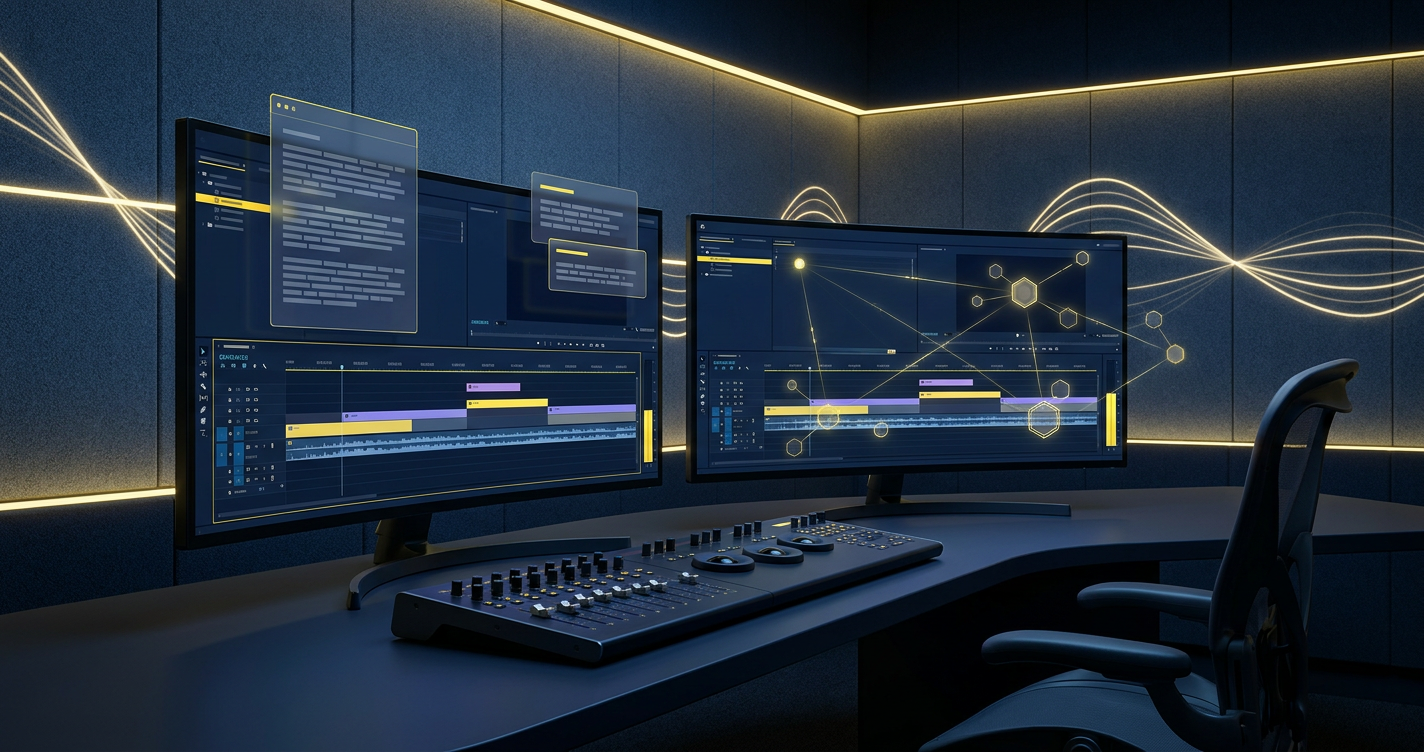
AI is well-suited to the logistical parts of the workflow: detecting speech and silence, mapping scenes, producing an initial descriptive script, aligning candidate descriptions to time windows, and generating first-pass narration. These tasks are important, but they are not the full craft.
The craft is deciding what matters.
A strong audio describer knows when to describe a gesture and when to stay silent. They understand tone, genre, pacing, cultural context, and the difference between useful detail and clutter. They know that a thriller, a children’s program, a training video, and an art-house film do not need the same descriptive voice.
AI can produce a baseline. Human describers make it good.
In this model, the human role moves from blank-page production to higher-leverage work:
- AD editor
- QA specialist
- accessibility reviewer
- script supervisor
- localization reviewer
- AD director for premium content
- blind and low-vision audience consultant
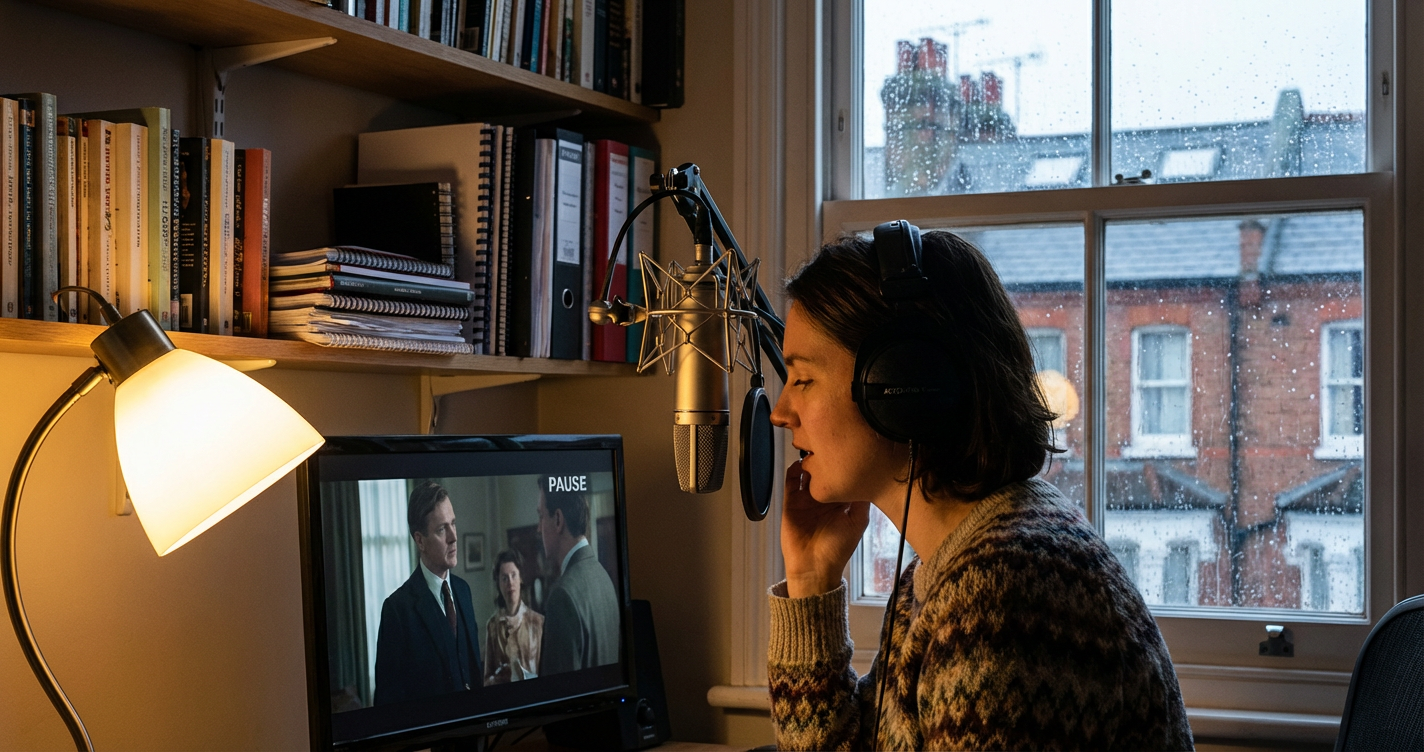
Reviewing and refining an AI-generated script can take a fraction of the time required to create every word from scratch. That means one skilled describer can oversee more content in a day while spending more of that day on judgment, nuance, and audience value.
3. The Eyes-Free Economy Expands the Market
Audio description is often discussed only as a compliance requirement. That is too narrow.
AD is part of a larger eyes-free media economy: people listening while commuting, cooking, exercising, multitasking, studying, or navigating screens they cannot fully see. Accessibility features often start as accommodations and become mainstream expectations.
When automated AD reduces the cost and turnaround time of access, platforms can describe content they previously could not justify touching:
- educational video libraries
- corporate training archives
- public-sector meetings and announcements
- creator and YouTube catalogs
- regional OTT releases
- second-window and back-catalog titles
- internal enterprise knowledge videos
That expansion does not shrink the human market. It increases the surface area of the market.
As audiences get used to audio description being available everywhere, they will expect better AD on premium content: blockbuster films, intricate dramas, sports documentaries, children’s programming, and highly visual factual series.
For that premium tier, human expertise becomes more important, not less.
4. The Best Work Will Be Human-in-the-Loop
The future of AD is not fully manual or fully automated. It is human-in-the-loop.
That matters because accessibility is not a checkbox. A technically present audio description track can still be poor: too verbose, too sparse, badly timed, emotionally flat, culturally awkward, or distracting from the original work.
The job of AI is to make access possible at scale. The job of humans is to make that access worth using.
At Visonic AI, we think the strongest workflows will combine:
- automated scene understanding and timing
- draft script generation
- synthetic or selected voice options
- multilingual production support
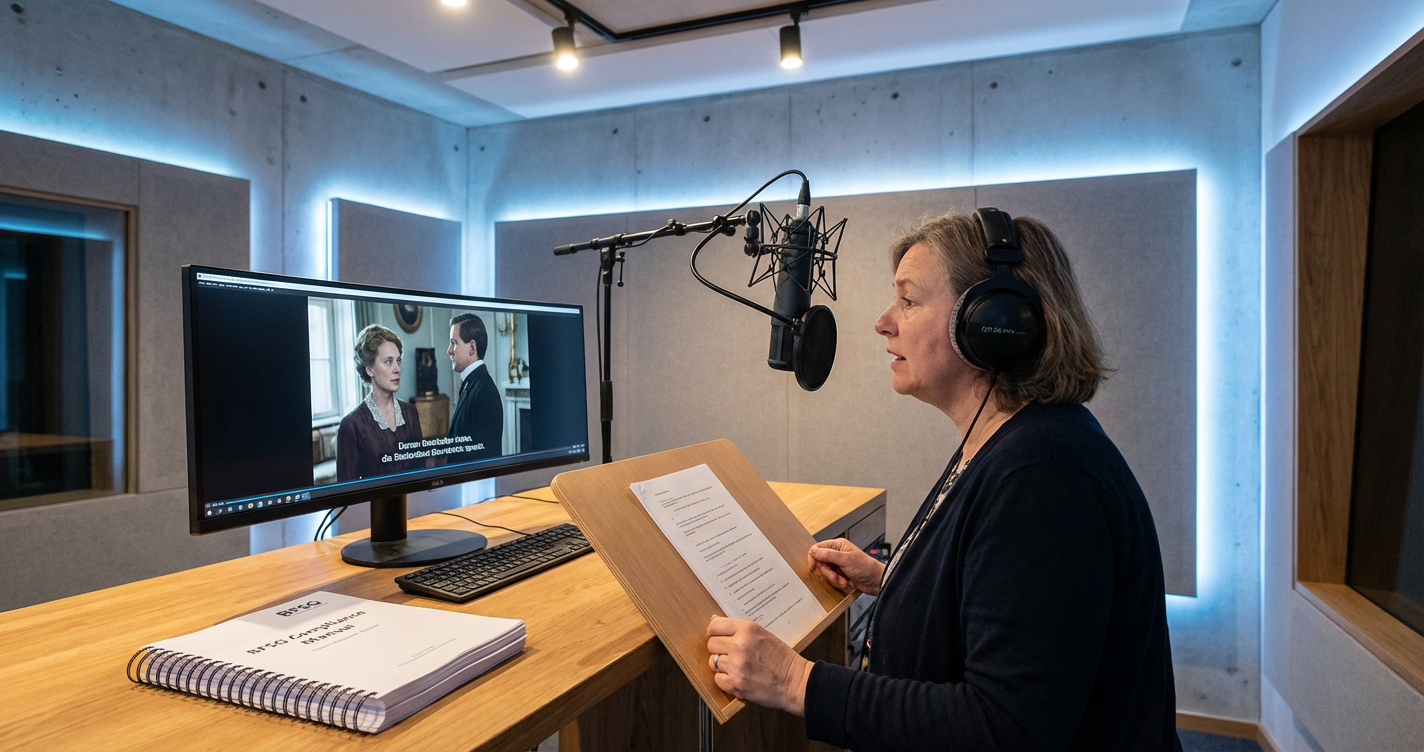
- human editorial review
- human QA for high-value content
- feedback from blind and low-vision users
That combination lets media teams handle back catalogs and daily releases without pretending that creative judgment can be removed from the process.
If you are new to the field, our complete guide to audio description explains how AD works and where it fits in accessible media.
The Visonic AI Vision
At Visonic AI, we view automation as an enabler, not an end state.
Our tools are designed to remove the localization tax and scriptwriting bottlenecks that prevent universal accessibility. By handling the impossible scale, we expand the market footprint of audio description itself.
AI will not replace the audio describer. It will give audio describers the tools to describe the world at a scale previously thought impossible.
If your team is trying to scale audio description across a large library, contact us. We would be happy to show how Visonic AI fits into a human-in-the-loop accessibility workflow.